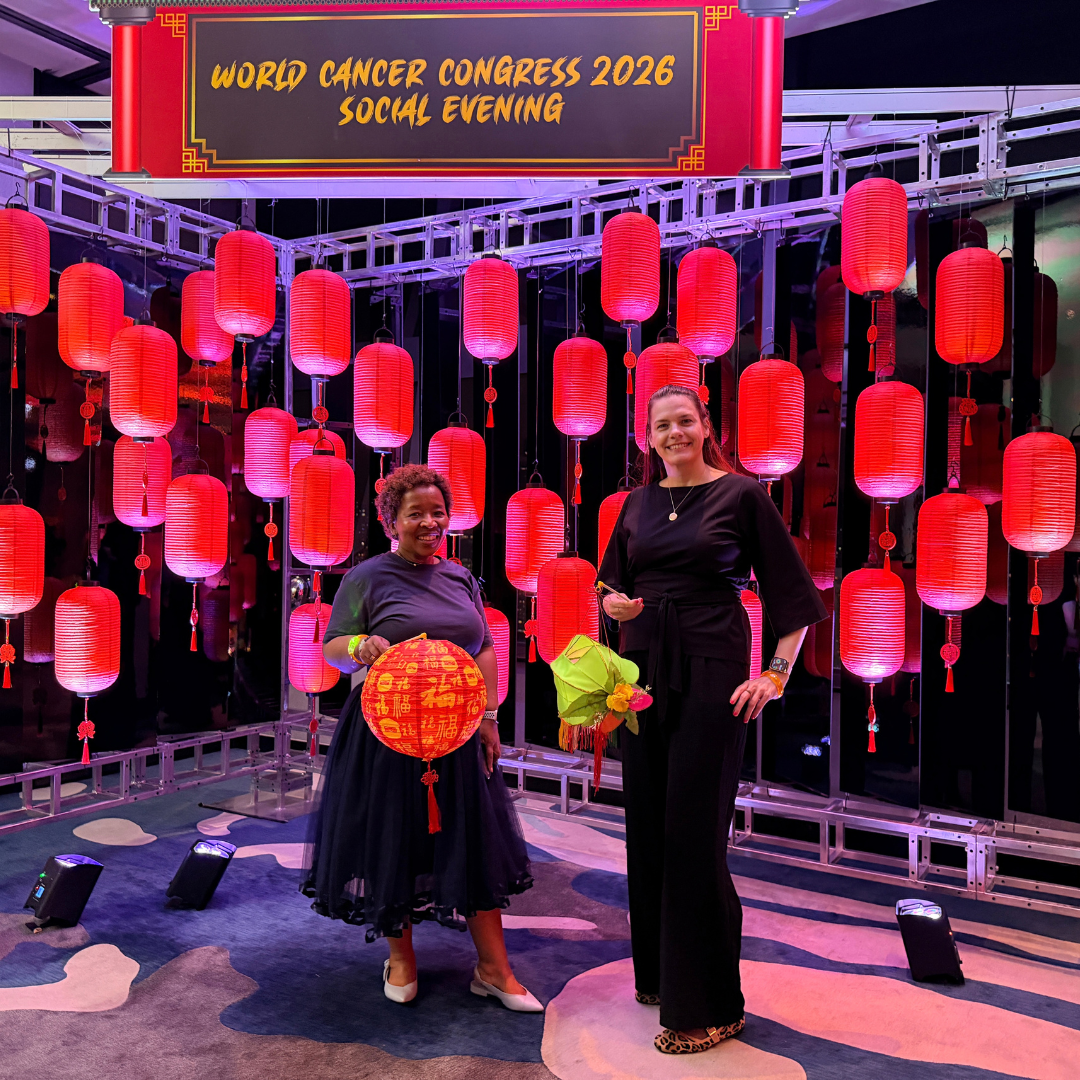
Perspectives on the UICC World Cancer Congress 2026
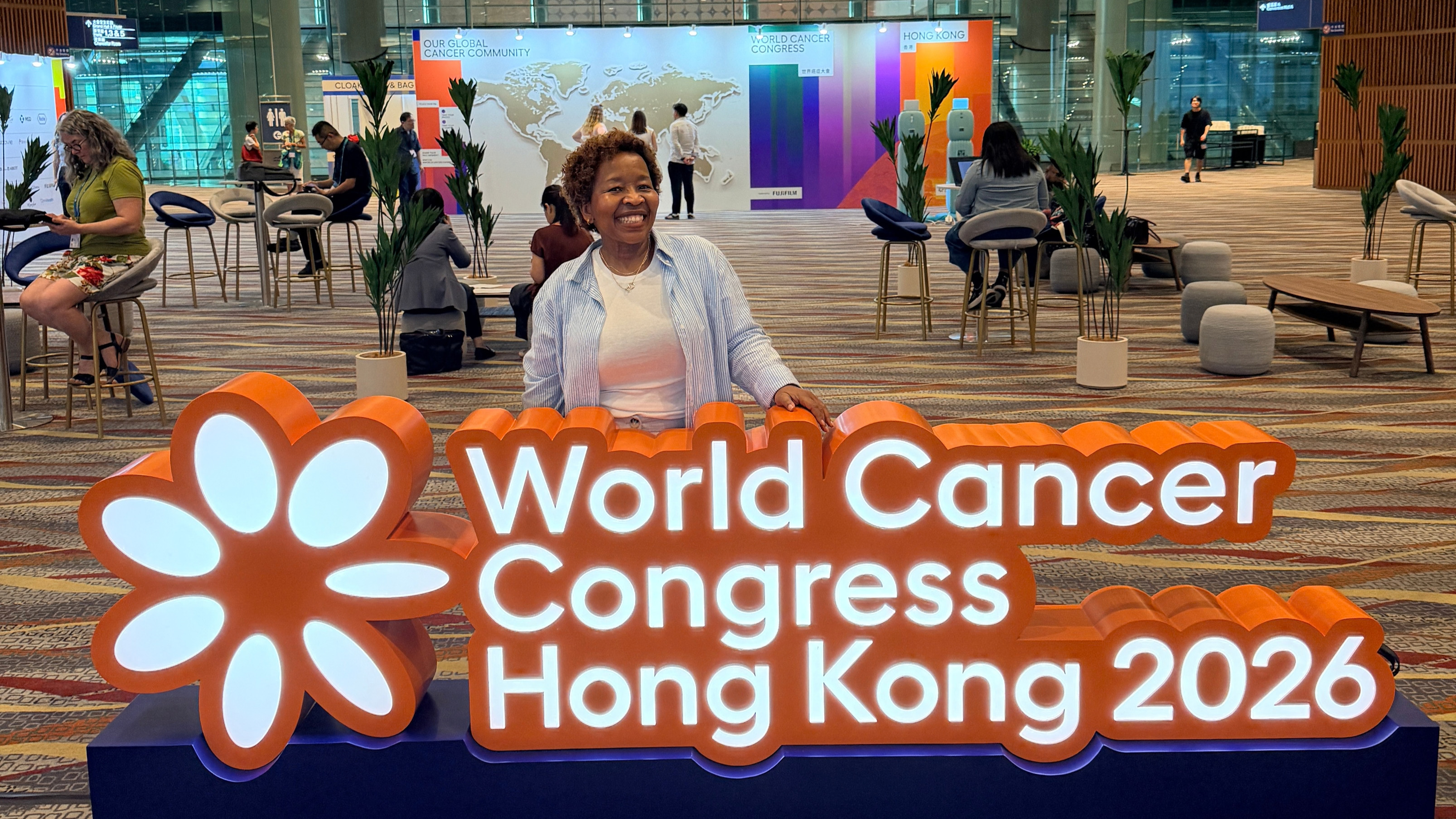
Written in two parts by Boitumelo Ramasodi and Nicole Sheahan, this blog offers their individual perspectives from the UICC World Cancer Congress and the important conversations taking place around the future of cancer care.
From Boitumelo Ramasodi, Regional Director for Southern Africa:
Walking into the World Cancer Congress as a colorectal cancer survivor, patient advocate and someone who works to amplify the voices of people affected by cancer was a deeply meaningful experience.
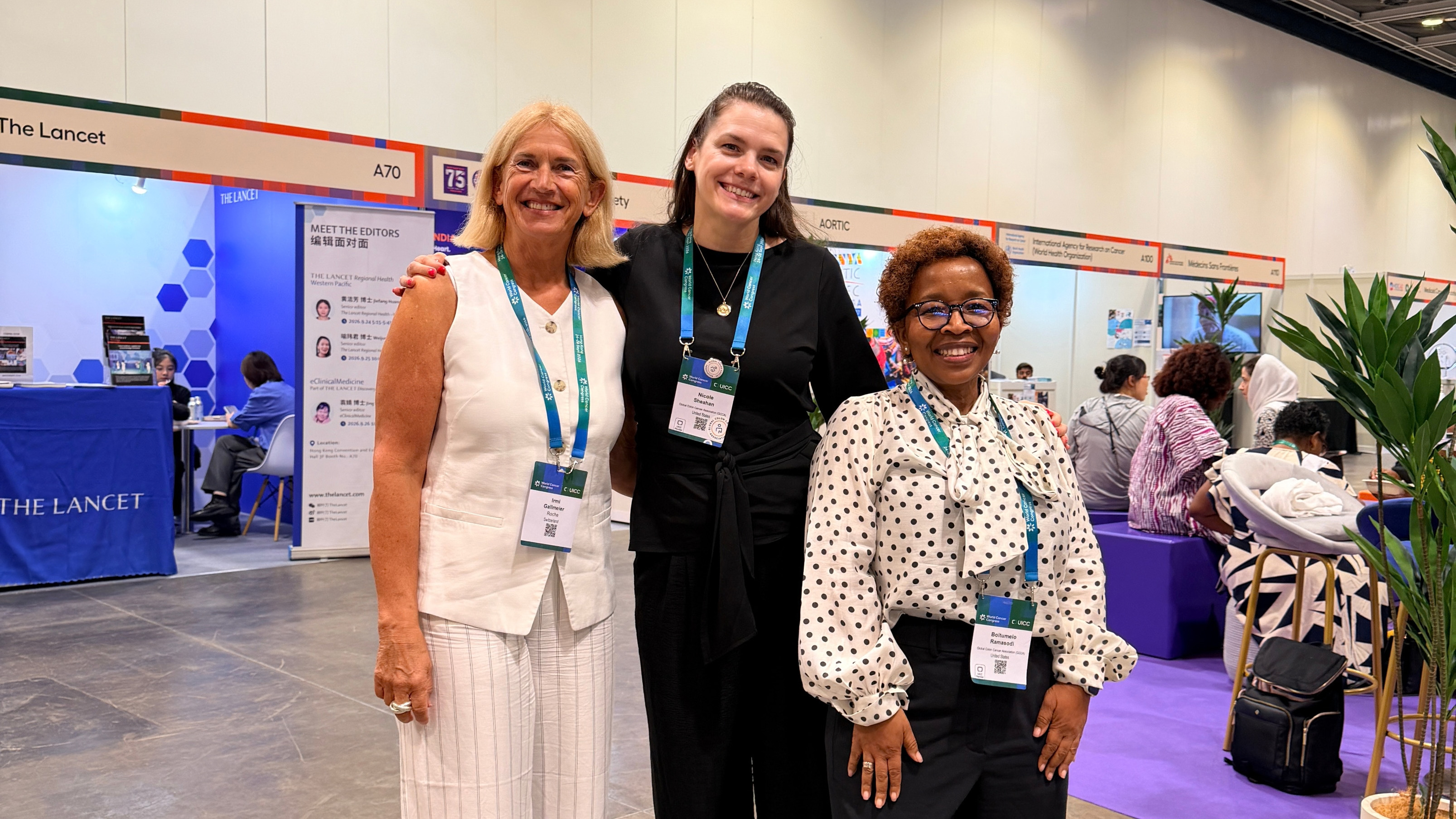
What stood out most to me at the World Cancer Congress was how the program was organized into themes. It gave the 3 days a clear structure and helped me find the conversations that mattered most to me. I followed two: Theme 4, People with Lived Experience, and Theme 5, Cancer Treatment and Palliative Care.
Two sessions spoke to me most.
Storytelling for Impact
This session reminded me that data tells us what is happening, but stories tell us why it matters. As a survivor and patient advocate, I know that a single honest story can open a door that a statistic alone cannot. Hearing real patient stories used to influence policy showed me that our voices are evidence in their own right.
Integrating Survivorship into Cancer Control
Something equally deep was stirred in me. Survivorship is not the end of the cancer journey. It is a phase that needs planning, funding and support like every other stage of care. Cancer control has to include life after treatment, not only the fight to get through it.
Across both themes, one message came through clearly: patients belong at the table. That means including us in research, not just as participants but as partners, and listening to us when policy is being shaped. “Nothing about us without us” is more than a slogan. It is a better way to do the work.
One of my personal highlights was seeing the abstract I coauthored on display. My Data 2 Policy team and I submitted the poster titled, The Increasing Burden of Colorectal Cancer in South Africa: A Warning Needing Action.
Standing in front of it, I thought of the patients, families and communities behind the words. Colorectal cancer awareness, screening and education are the reasons I do this work, and seeing South Africa's story represented on a global stage made it feel very real.
Our realities, our data, our patient experiences and our challenges deserve a place in international conversations about cancer control.
I left the World Cancer Congress with many new ideas, very encouraged and re-energised. Our stories matter, survivorship matters, and when people with lived experience are heard, change follows. I will carry that into my advocacy work.
From Nicole Sheahan, President:
Last week I represented GCCA at the UICC World Cancer Congress in Hong Kong, held September 24-26, alongside Tumi Ramasodi, GCCA's Regional Director for Southern Africa. Organized by the Union for International Cancer Control, the World Cancer Congress is one of the largest global gatherings in cancer control. It brings together patient advocates, policymakers, healthcare professionals, researchers, and industry partners from around the world to share evidence, compare approaches, and set priorities for the years ahead. For GCCA, it was a valuable opportunity to connect with stakeholders across every part of the cancer community and to make sure colorectal cancer has a voice in those conversations.
The opening plenary got straight to the point, laying out the global state of cancer control using the latest data from the World Health Organization and the International Agency for Research on Cancer. The picture it presented was mixed, with significant gains in some areas, such as tobacco control and the reduction of infection-related cancers, alongside troubling trends in others, including rising obesity, persistent gaps in early diagnosis, and national cancer plans that too often lack the funding to be carried out. Running through all of it was a reminder of how many people cancer reaches, whether through their own diagnosis or that of someone close to them, and of the urgency that scale should bring to our work.
Where we stand today
In 2024 there were 20.6 million new cancer cases and 9.8 million cancer deaths worldwide. One in five of us will face cancer in our lifetime, and cancer touches 92% of people through their own diagnosis or that of a close family member. Colorectal cancer remains among the most commonly diagnosed cancers and a leading cause of cancer death, so a large share of that burden falls on the patients and families our members serve.
Where we are heading
By 2050, annual cases are projected to reach 34.4 million and deaths 17.5 million, increases of 67% and 79%. Low and medium Human Development Index countries will see both double. For colorectal cancer, which is largely preventable, and highly treatable when caught early, that growth will fall hardest in countries where screening and diagnostic services are least available.
Risk factors that drive colorectal cancer
The risk factors most closely tied to colorectal cancer are the ones where the world is making the least progress. Obesity is rising, and no country is halting it. Fewer than half of countries have a funded physical activity plan, and 80% of adolescents are insufficiently active. Only 40 to 60 countries restrict food marketing to children, and alcohol policy remains thin in much of sub-Saharan Africa. With early-onset colorectal cancer increasing, these trends among young people are especially concerning. The one area of real progress has been tobacco, which is also a risk factor for colorectal cancer, where use has fallen 27% since 2010 and shows what sustained policy work can achieve for diet, weight, and physical activity.
Early detection: a stark divide
In high-income countries, more than 60% of breast cancers are diagnosed at Stage 1 or 2, compared with 28% in low- and middle-income countries. Nearly half the world's population has little or no access to diagnostic services. These figures focused on breast and cervical cancer, but the gap is the same one colorectal cancer patients face, since a positive stool test means little without access to colonoscopy, pathology, and staging.
Plans without money
Only 27% of governments report that their national cancer control plan includes a financing strategy. Planners from 76 governments told UICC that funding is a very significant issue for many countries and that implementation planning is a struggle. For our members, this is where advocacy matters most: making sure colorectal cancer screening, diagnosis, and treatment are written into national plans and funded.
The targets ahead
The World Cancer Declaration 2025-2035 sets five global targets: a 25% reduction in cancer mortality, a 30% reduction in exposure to major risk factors, 60% of cancers diagnosed at an early stage, essential medicines and diagnostics available in 80% of cancer care facilities, and essential cancer services included in Universal Health Coverage (UHC) packages in 50% of countries. Each one depends on progress in colorectal cancer, given how common it is and how much early detection changes outcomes.
Connecting with our community
The Congress was also a chance to strengthen our own community. We hosted a GCCA member meetup, and it was wonderful to see so many of our members in person. So much of our work together happens across time zones and screens, and there is no substitute for sitting in the same room.
I was proud to support the Global Cancer Coalitions Network in its poster presentation, "Recovery Under Pressure: Persistent Strain on Cancer Patient Organizations Five Years After COVID-19." The findings speak to something our members know well: the organizations that support patients are still carrying the weight of the pandemic, and their sustainability deserves attention from funders and policymakers alike.
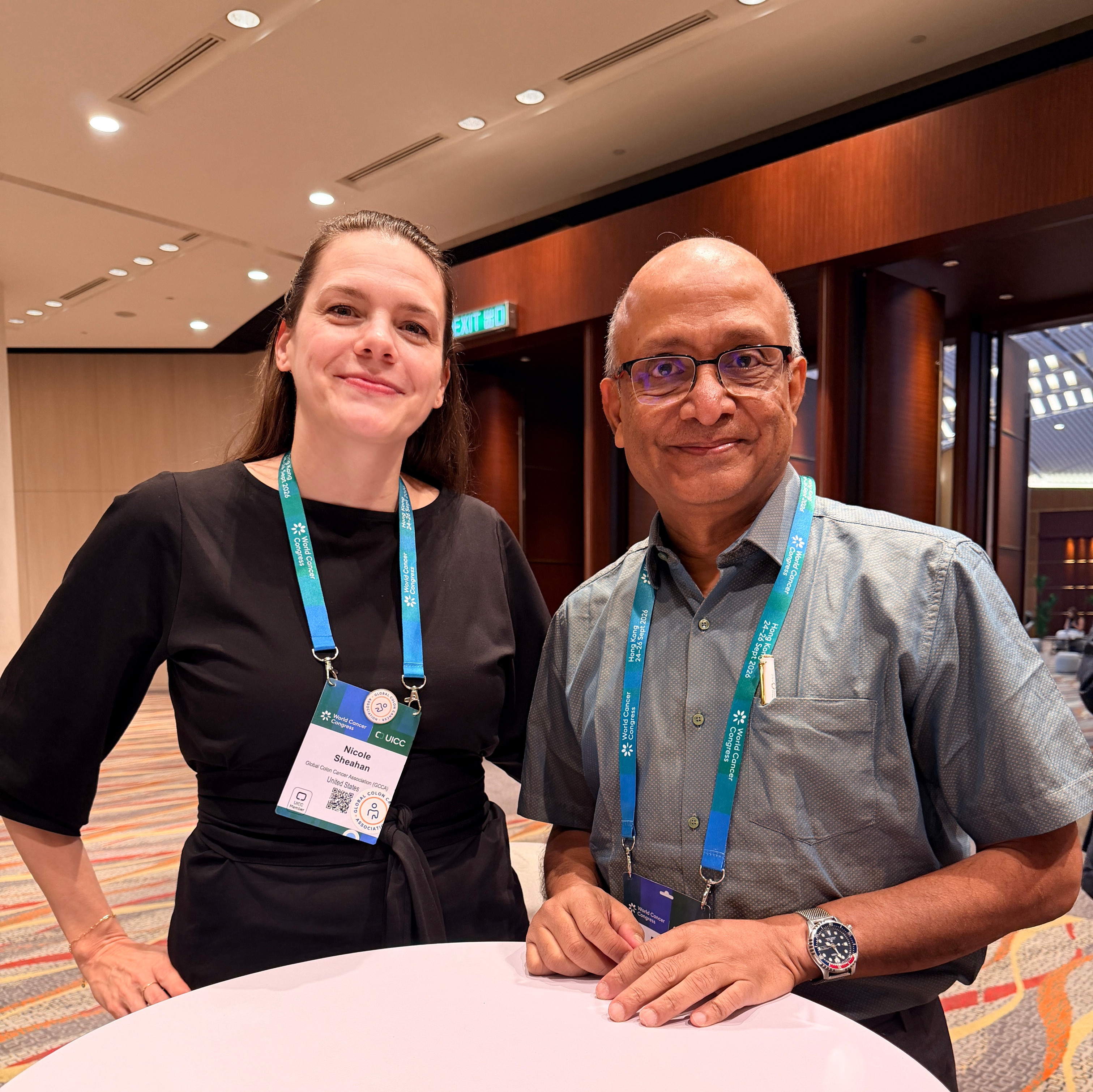
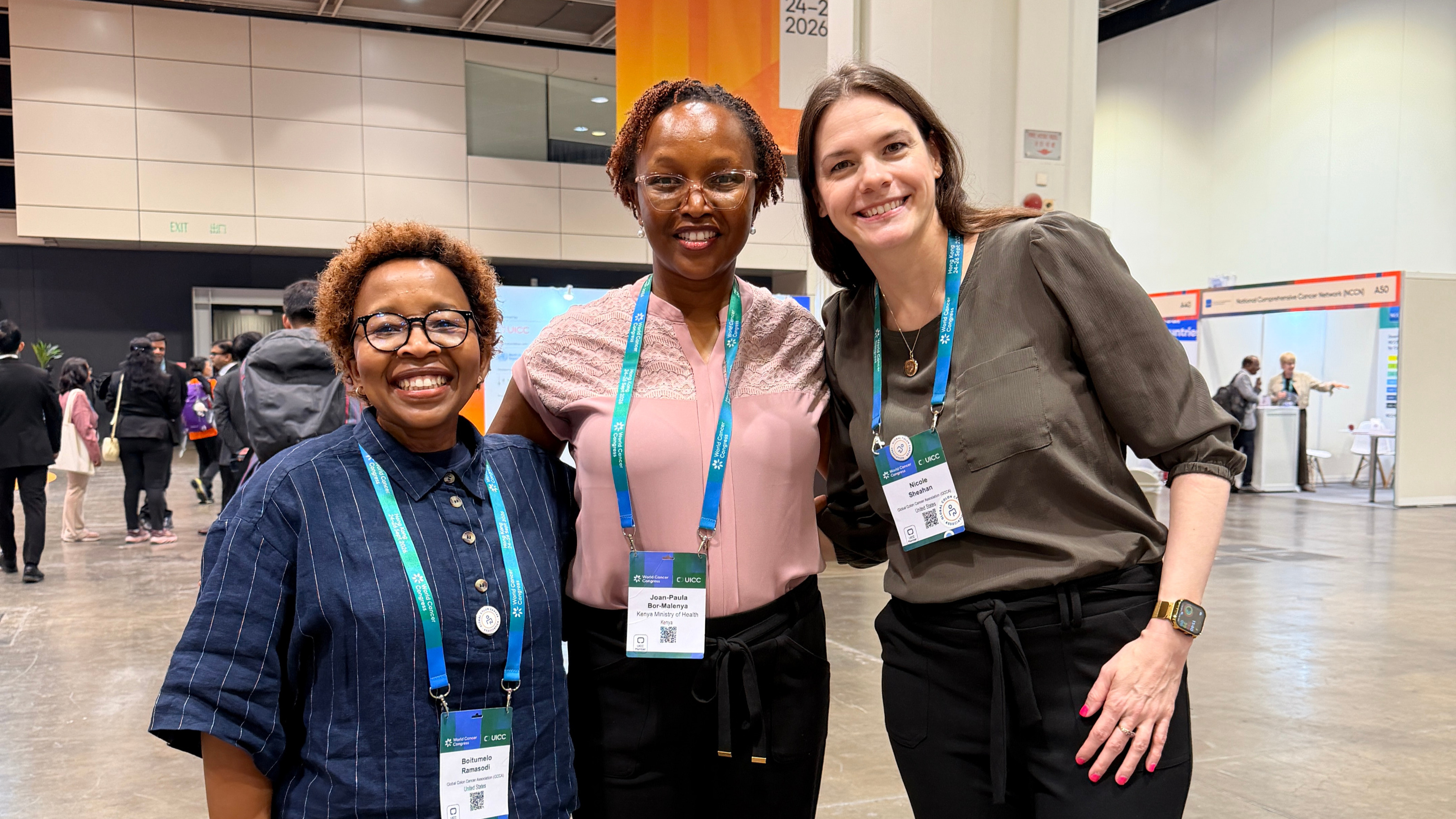
I also had the chance to meet with two people who will play important roles at our upcoming 7th Annual Global Colorectal Cancer Congress in Nairobi on November 5-6. Dr. Partha Basu, Head of the Early Detection, Prevention and Infections Branch at the International Agency for Research on Cancer (IARC/WHO), will deliver our keynote address, and Dr. Joan-Paula Bor Malenya, Head of the National Cancer Control Program at the Kenyan Ministry of Health, will give the host country welcome. Our conversations reinforced how much the themes from Hong Kong, particularly early detection, financing, and implementation, will carry forward into Nairobi.
What this means for GCCA
For our 150 member organizations across 60 countries, the takeaway is practical: the global targets and the data to support them are already in place, but most countries still lack the financing and implementation plans needed to reach them. Patient advocates are well placed to push for both, and to make sure colorectal cancer is part of the conversation when governments decide what goes into their national plans and their UHC packages.
I left Hong Kong with a clear sense of the scale of the challenge and of the role our community has to play in meeting it, and I look forward to continuing that work with all of you, including at our Global Colorectal Cancer Congress in November, whether you join us in Nairobi or online.