
Colon Cancer vs. Rectal Cancer vs. Bowel Cancer: What’s the Difference?
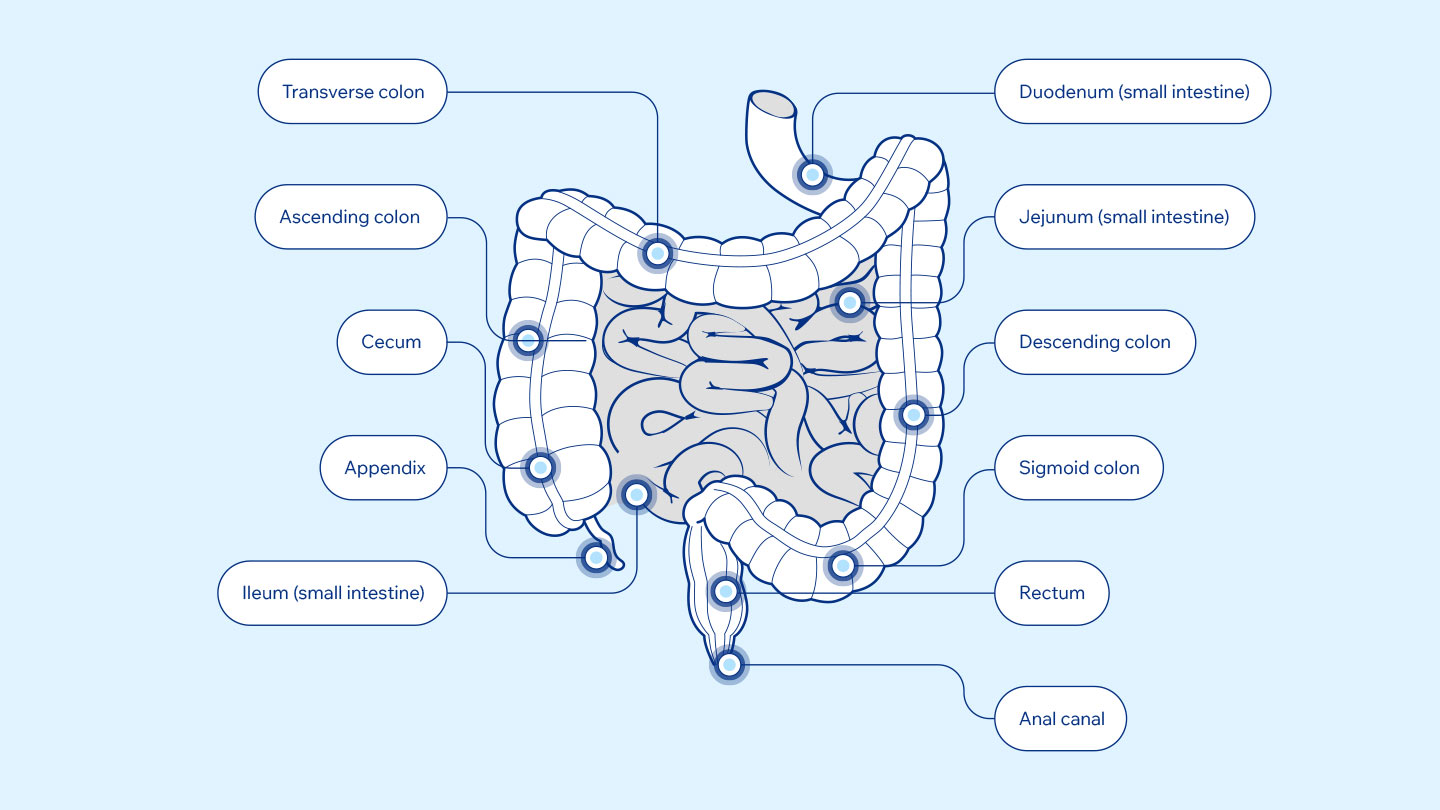
If you or someone you love has been diagnosed withcolorectal cancer, you may wonder: What is the difference between colon cancer, rectal cancer, and bowel cancer?
The short answer is location. Colon cancer begins in the colon, while rectal cancer begins in the rectum. Together, they are called colorectal cancer or bowel cancer.
Because the colon and rectum are connected parts of the large intestine, the two cancers share many characteristics. They have many of the same risk factors, can cause similar symptoms, and can be treated with many of the same therapies. But the location of a tumor can also make a meaningful difference. It can influence the cancer's biology, the way it is staged and treated, the type of surgery that may be needed, and the role of radiation therapy.
Understanding these similarities and differences can help patients and caregivers better understand a diagnosis and have more informed conversations with their healthcare team.
What About Bowel Cancer?
When you hear the terms colorectal cancer and bowel cancer, they generally refer to the same disease. “Bowel cancer” is a broader term commonly used in some countries to describe cancer that starts in the large bowel, also known as the large intestine, including the colon and rectum.
Location
The large intestine or large bowel includes the cecum, ascending colon, transverse colon, descending colon, sigmoid colon, and rectum. Colorectal cancer can develop in any of these locations. Cancer that starts in the colon is called colon cancer, while cancer that starts in the rectum is called rectal cancer. Together, they are colorectal cancer, also called bowel cancer.
Location is more than an anatomical description. Research has shown that colorectal cancers arising in different parts of the large intestine can have different molecular and biological characteristics. Tumor location can therefore provide information about both prognosis, or the likely course of the disease, and prediction, or how a cancer may respond to certain treatments.
You may also hear the terms "right-sided" and"left-sided" colorectal cancer. These terms describe where the primary tumor is located within the large intestine.
Right-sided, or proximal, tumors generally include cancers in the cecum, ascending colon, hepatic flexure, and first two-thirds of the transverse colon. Left-sided, or distal, tumors include cancers in the last third of the transverse colon, splenic flexure, descending colon, sigmoid colon, and rectum.
Why does this matter? The right and left sides of the large intestine develop from different parts of the embryo and are exposed to different environments as food moves through the digestive system. They also have differences in the gut microbiome and in the molecular characteristics of tumors that develop there.
Your healthcare team should document the location of yourprimary tumor when you are diagnosed with colorectal cancer. Knowing its location is one piece of information that can help guide treatment decisions.
Etiology
Colon and rectal cancers share many of the same risk factors. Having a risk factor does not mean that someone will develop colorectal cancer, and people can develop colorectal cancer without any known risk factors.
Risk factors include:
Increasing age
A family history of colorectal cancer
A personal history of colorectal cancer or certain types of colorectal polyps
Inflammatory bowel disease, including Crohn's disease and ulcerative colitis
Certain inherited conditions, including Lynch syndrome and familial adenomatous polyposis
Physical inactivity
Overweight and obesity
Smoking
Alcohol consumption
Certain dietary patterns
Most colorectal cancers begin as precancerous polyps, which can develop in either the colon or rectum. Some polyps can remain in place for years before becoming cancerous. Screening can identify and remove many precancerous polyps before they become cancer, making colorectal cancer unusual among cancers because screening can help prevent the disease as well as detect it early.
Age is another important consideration. Although colorectal cancer remains more common in older adults, early-onset colorectal cancer, diagnosed before age 50, has been increasing. This increase has been particularly concerning because the reasons for the trend are not yet fully understood.
Researchers are studying a number of possible contributors, including diet, physical inactivity, obesity, alcohol consumption, smoking, the gut microbiome, and environmental exposures. Most early-onset colorectal cancers are not caused by a known hereditary syndrome, although people diagnosed at younger ages are more likely to have an inherited predisposition than older patients.
Importantly, the known risk factors generally apply to both colon and rectal cancer. There is not a separate set of causes for the two diseases.
Screening and Diagnosis
Colorectal cancer screening can prevent colorectal cancer and find it early.
Screening looks for colorectal cancer or precancerous polyps in people who do not have symptoms. Depending on a person's age, risk factors, country, and screening guidelines, screening may include stool-based tests, colonoscopy, sigmoidoscopy, and other tests. In the United States, for example, the U.S. Preventive Services Task Force recommends screening average-risk adults from ages 45 through 75. People at increased risk may need to begin screening earlier or be screened more often.
Screening is generally colorectal cancer screening, rather than separate screening for colon cancer and rectal cancer. A colonoscopy allows a healthcare professional to examine the entire colon and rectum, and precancerous polyps can often be removed during the procedure.
Screening and diagnosis are different. Screening is performed when a person does not have symptoms. If symptoms or an abnormal screening test suggest that colorectal cancer may be present, diagnostic testing may include colonoscopy or sigmoidoscopy, biopsy, and imaging such as CT, MRI, or PET scans.
Symptoms can include:
Changes in bowel habits
Blood in or on the stool
Rectal bleeding
Abdominal pain or bloating
Unexplained weight loss
Symptoms alone generally cannot tell you whether a cancer is located in the colon or rectum. If you have symptoms that could be associated with colorectal cancer, talk with a healthcare professional.
Once colorectal cancer is diagnosed, staging becomes animportant part of treatment planning and prognosis. Stage describes how far the cancer has grown and whether it has spread to nearby lymph nodes or distant organs.
For rectal cancer, the tumor's exact location within the rectum and its relationship to surrounding structures can be particularly important when planning treatment.
Biomarkers
Tumor location is one piece of the colorectal cancer puzzle. Biomarkers provide another.
Every colorectal cancer has its own biological characteristics. Biomarker testing can identify specific changes or features in a tumor that may provide information about prognosis or help determine which treatments may be appropriate.
Important colorectal cancer biomarkers can include:
MSI and MMR: Microsatellite instability (MSI) and mismatchrepair (MMR) status can identify tumors that may be particularly responsive toimmune checkpoint inhibitors.
KRAS and NRAS: RAS mutations can affect whether certaintargeted therapies, including EGFR inhibitors, are appropriate.
BRAF: Some colorectal cancers have BRAF alterations that canbe targeted with specific therapies.
HER2: HER2 amplification or overexpression can provide apotential target for treatment in selected patients.
NTRK and other rare alterations: Certain uncommon molecular alterations can also identify potential treatment options, including some tumor-agnostic therapies.
Biomarker testing is an important part of colorectal cancer treatment planning, particularly because targeted therapy and immunotherapy decisions may depend on the results.
Importantly, tumor location and biomarkers provide different but complementary information.
Location tells your healthcare team where the cancer began and can provide clues about its biology and behavior. Biomarker testing looks more directly at the molecular characteristics of the tumor.
For example, right-sided and left-sided colorectal cancers have different molecular profiles, and tumor sidedness can be associated with differences in prognosis and response to certain systemic treatments, particularly in metastatic disease. Research suggests that patients with left-sided, RAS-wild-type metastatic colorectal cancer may derive greater benefit from anti-EGFR therapies than patients with right-sided tumors.
However, tumor location does not replace biomarker testing. Treatment decisions should take into account the full picture, including tumor location, biomarkers, stage, and the person's overall health and preferences.
Treatment and Prognosis
Colon and rectal cancers can both be treated with surgery, chemotherapy, radiation therapy, immunotherapy, and targeted therapy. But the combination and timing of these treatments can be quite different.
Colorectal cancer treatment depends on multiple factors, including whether the cancer is in the colon or rectum, its stage, biomarker results, and a person's overall health.
Colon Cancer Treatment
For many people with localized colon cancer, surgery is the primary treatment. The surgeon removes the section of the colon containing the tumor, along with nearby lymph nodes. For some early-stage cancers, surgery maybe the only treatment needed.
For some stage II colon cancers, chemotherapy may be recommended after surgery when features of the cancer indicate a higher risk of recurrence. Stage III colon cancer is generally treated with surgery followed by chemotherapy.
For metastatic colon cancer, treatment may include chemotherapy, targeted therapy, and/or immunotherapy, depending on the tumor's biomarkers and other characteristics. In selected patients whose cancer has spread to a limited number of sites, such as the liver or lungs, surgery or other local treatments may also be possible.
Radiation is used less frequently for colon cancer than for rectal cancer. When it is used, it may be considered in specific circumstances, including some locally advanced tumors, tumors that cannot be completely removed, or for symptom relief.
Rectal Cancer Treatment
Rectal cancer often requires a different treatment strategy because of the anatomy of the pelvis.
The rectum is located in a relatively confined space and is close to structures involved in bowel, urinary, and sexual function. The location of the tumor within the rectum also matters. These factors can make local control of rectal cancer particularly important and can influence the type and timing of treatment.
For this reason, many patients with stage II and stage III rectal cancer receive some combination of chemotherapy and radiation before surgery rather than going directly to surgery. Treatment given before the main treatment is called neoadjuvant therapy. The goals can include shrinking the tumor, making it easier to remove, reducing the risk of local recurrence, and increasing the possibility of preserving normal bowel and anal function.
Total Neoadjuvant Therapy
Treatment for locally advanced rectal cancer has evolved significantly in recent years.
Total neoadjuvant therapy (TNT) gives both chemotherapy and radiation before surgery rather than giving some chemotherapy after surgery. Clinical trials such as RAPIDO and PRODIGE 23 provided evidence supporting TNT as an important treatment option for selected patients with locally advanced rectal cancer. Studies have shown improvements in outcomes such as disease-related treatment failure and pathological complete response with certain TNT approaches.
The exact treatment sequence is not the same for everyone. Depending on the tumor and the patient's circumstances, chemotherapy may be given before or after chemoradiation, and some patients may receive short-course radiation rather than longer-course chemoradiation.
The goal is not simply to make treatment more intensive. TNT can allow doctors to treat potential microscopic disease earlier, improve tumor response, and potentially increase the number of patients who can have successful surgery or, in carefully selected cases, avoid surgery.
When Might Rectal Cancer Surgery Be Different?
Surgery for rectal cancer can be more complex than surgery for colon cancer because the rectum is located within the pelvis and is close to the anal sphincter and other important structures.
For colon cancer, a segment of the colon containing the tumor is typically removed and the remaining ends of the colon are reconnected when possible.
For rectal cancer, the type of surgery depends heavily on where the tumor is located within the rectum and how it relates to the anal sphincter and surrounding tissues. Procedures can include removal of part or all of the rectum. Some patients can have surgery that preserves the anal sphincter, while others may require an abdominoperineal resection and a permanent colostomy.
The possibility of preserving the rectum or avoiding a permanent stoma is one reason treatment before surgery can be particularly important for some rectal cancer patients.
Radiation Therapy
One of the clearest differences between colon and rectal cancer is the role of radiation therapy.
Radiation is a localized treatment that targets a specific area of the body. It is used more often for rectal cancer than for colon cancer. For rectal cancer, radiation may be used before surgery to shrink the tumor and improve local control, or in other situations to treat remaining or recurrent cancer or relieve symptoms.
The difference is partly related to anatomy. Because the rectum sits within the pelvis, there is particular concern about controlling cancer in and around the original tumor site. Historically, local recurrence was an important challenge in rectal cancer treatment, helping drive the development of approaches such as total mesorectal excision and preoperative chemoradiation.
However, radiation is not automatically required for every rectal cancer patient. The need for radiation depends on the stage, tumor location, risk of recurrence, response to treatment, and the treatment approach being used. The PROSPECT trial, for example, found that carefully selected patients with locally advanced rectal cancer could receive neoadjuvant chemotherapy with selective use of radiation without compromising key outcomes.
This is an important example of how treatment is becoming increasingly individualized.
Immunotherapy
Immunotherapy helps the body's immune system recognize and attack cancer cells. The immune checkpoint inhibitors used in colorectal cancer include drugs such as pembrolizumab, nivolumab, and ipilimumab.
Whether immunotherapy is appropriate depends largely on the biology of the tumor. Colorectal cancers that are MSI-H or dMMR can be particularly responsive to immune checkpoint inhibitors.
This has become especially important in rectal cancer. Early clinical research has shown remarkable responses to immunotherapy in some patients with locally advanced dMMR rectal cancer, raising the possibility that carefully selected patients with complete responses may be able to avoid surgery. This remains an area of active research and requires specialized evaluation and close monitoring.
Targeted Therapy
Targeted therapies are designed to act on specific characteristics of cancer cells. In colorectal cancer, treatment may be guided by biomarkers such as KRAS,NRAS, BRAF, HER2, and other molecular alterations.
Targeted therapy is particularly important in advanced and metastatic colorectal cancer. Tumor location can also influence the expected benefit of some targeted treatments. For example, among patients with RAS-wild-type metastatic colorectal cancer, clinical trial data suggest that left-sided tumors may benefit more from anti-EGFR therapy than right-sided tumors.
This does not mean that everyone with left-sided cancer should receive an EGFR inhibitor or that everyone with right-sided cancer should receive a different treatment. Biomarker results and the full clinical picture remain essential.
Does Colon Cancer Have a Better Prognosis Than Rectal Cancer?
There is no simple rule that colon cancer has a better prognosis than rectal cancer, or vice versa.
Stage is one of the most important factors affecting prognosis. Whether cancer has spread to nearby lymph nodes or distant organs has a major impact on outcomes. Tumor biology, location, response to treatment, overall health, and other factors also matter.
Research comparing colon and rectal cancer has not shown a consistent advantage for one location across every stage. A population-based study using SEER data found that survival differences between colon and rectal cancer varied by stage, with neither consistently having a worse prognosis across all stages.
Within colon cancer, however, tumor sidedness does appear to have prognostic significance. Large meta-analyses have found that right-sided colon cancers are associated with poorer overall survival than left-sided colon cancers, particularly in advanced disease.
For metastatic colorectal cancer, tumor sidedness also appears to have predictive implications. Multiple studies have found differences in treatment response and outcomes between right- and left-sided tumors, although location should be considered alongside biomarkers and other clinical factors rather than used on its own to select treatment.
For rectal cancer, the risk of local recurrence has historically been an important consideration. Advances in surgical techniques, particularly total mesorectal excision, as well as preoperative treatment and newer approaches such as TNT, have substantially changed the management of locally advanced rectal cancer.
Another important development is organ preservation. Some patients with rectal cancer have such a strong response to neoadjuvant treatment that they may be candidates for a carefully monitored nonoperative approach, sometimes called "watch and wait." This is not appropriate for everyone, and it requires specialized assessment and intensive follow-up.
What Does This Mean for Patients?
So, what is the difference between colon cancer and rectal cancer?
The simplest answer is where the cancer starts. But that location can have important consequences.
Colon and rectal cancers share many of the same risk factors, symptoms, screening methods, biomarkers, and treatment options. At the same time, tumor location can influence the cancer's biology, prognosis, surgical approach, risk of local recurrence, and the role and timing of treatments such as radiation and chemotherapy.
And location is only one part of the picture.
Your stage, tumor location, biomarkers, overall health, and personal circumstances all help your healthcare team develop a treatment plan. Advances in precision medicine are also making treatment increasingly individualized. What is appropriate for one person with colorectal cancer may not be appropriate for another.
If you or someone you love has been diagnosed with colorectal cancer, consider asking your healthcare team:
Where exactly is my tumor located?
Is my tumor considered right-sided or left-sided?
What stage is my cancer?
Has my tumor been tested for relevant biomarkers?
How do my tumor location and biomarker results affect my treatment options?
Will I need treatment before surgery? If so, why?
Is radiation recommended for my cancer?
What are the goals of my treatment?
Are there clinical trials that may be appropriate for me?
Understanding your colorectal cancer means looking beyond its name. Knowing where the tumor is located and understanding its biology can help you and your healthcare team make more informed decisions about your care.
Selected Scientific References
Petrelli F, et al. Prognostic Survival Associated WithLeft-Sided vs Right-Sided Colon Cancer: A Systematic Review and Meta-analysis. JAMAOncology. 2017;3(2):211-219. PMID: 27787550.
Petrelli F, et al. Prognostic value of primary tumorlocation in colorectal cancer: an updated meta-analysis. Inflammopharmacology.2023. PMID: 37405571.
Arnold D, et al. The predictive value of primary tumorlocation in patients with metastatic colorectal cancer: A systematic review. CriticalReviews in Oncology/Hematology. 2018. PMID: 29279095.
Heinemann V, et al. The relevance of primary tumour locationin patients with metastatic colorectal cancer: A meta-analysis of first-lineclinical trials. European Journal of Cancer. 2017. PMID: 27907852.
Lenz HJ, et al. Understanding the role of primary tumourlocalisation in colorectal cancer treatment and outcomes. European Journal ofCancer. 2017. PMID: 28787661.
Conroy T, et al. Neoadjuvant chemotherapy with FOLFIRINOXand preoperative chemoradiotherapy for patients with locally advanced rectalcancer (UNICANCER-PRODIGE 23): a multicentre, randomised, open-label, phase 3trial. Lancet Oncology. 2021;22(5):702-715. PMID: 33862000.
Giunta EF, et al. Total neoadjuvant therapy for rectalcancer: Making sense of the results from the RAPIDO and PRODIGE 23 trials. CancerTreatment Reviews. 2021;96:102177. PMID:33798955.
Schrag D, et al. Preoperative Treatment of Locally AdvancedRectal Cancer. New England Journal of Medicine. 2023. Jul 27;389(4):322-334. PMID:37272534; PMCID: PMC10775881.
Cremolini C,et al. Predictive and prognostic biomarkers with therapeutic targets incolorectal cancer: A 2021 update on current development, evidence, andrecommendation. Targeted Oncology. 2021. PMID: 33832365.
van den Brink M, et al. Clinical nature and prognosis oflocally recurrent rectal cancer after total mesorectal excision with or withoutpreoperative radiotherapy. Journal of Clinical Oncology. 2004;22(19):3958-3964.PMID: 15459218.
Differences in survival between colon and rectal cancer fromSEER data. [Population-based study]. PMID: 24265711.