
September Member Meeting
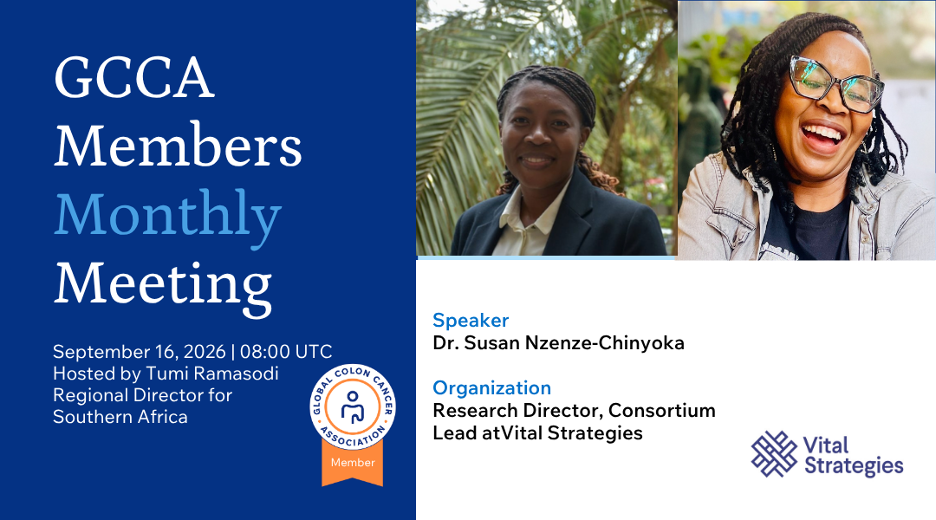
Our latest GCCA member meeting gave us an opportunity to talk about something that has become very meaningful to me personally, Data to Policy(D2P).
Our speaker Dr Susan Nzenze-Chinyoka took us back to the beginning, explaining what D2P is, where the programme came from, who it is designed for, and most importantly, how it helps bridge the gap between data, evidence and health policy.
D2P is an international training initiative that builds government health professionals’ skills in using data to shape informed policy. It guides participants through developing data-driven policy briefs and recommendations that respond to government health priorities. Participants learn skills like root cause analysis and health and economic impact assessments, plus how to communicate with stakeholders using data. In plain language, it teaches people how to turn numbers into change.
The Data to Policy programme was established in 2015 as part of the Bloomberg Philanthropies Data for Health Initiative, co-led by the U.S. Centers for Disease Control and Prevention and Vital Strategies. Its purpose is to build the capacity to use health data to develop evidence-informed policy recommendations. Participants work on real public health problems and develop data-driven policy briefs that can ultimately be presented to policymakers and other stakeholders.
Traditionally, D2P has been designed primarily for public health professionals working in areas such as health data,p olicy development and programme planning. Participants bring different skills to the table, epidemiology and data, programme knowledge, and an understanding of policy processes. Dr Nzenze highlighted how patients’ representatives and advocates can and should be part of this program alongside public health professionals.
And this is where my own D2P journey becomes particularly special. As a colorectal cancer survivor and patient advocate, I entered a space that I would not traditionally have been expected to occupy. And I did so with a different kind of expertise.
I know what it means to move through the cancer system as a patient. I know what it feels like to navigate referrals, diagnosis, treatment and the uncertainty that comes with cancer. That perspective does not replace epidemiological or policy expertise, but offers another lens through which to approach policy development.
Patients should not only be the subjects of health policy. We should have a voice in shaping it. The statistics tell us about incidence, mortality, trends and disparities. But patients can help explain what those numbers look like in real life.
I hope my journey demonstrates that there is space at the policy table for different kinds of expertise, including the expertise that comes from having lived through the healthcare system ourselves.
Our D2P training cohort project is focused on colorectal cancer, so this is deeply personal to me. CRC is often caught late, and screening is where lives are saved or lost. Policy decisions about who gets screened, where, and how early depend on data, and data only counts when someone has the skills to turn it into a clear recommendation. For me, D2P is not simply about learning how to write a policy brief. It is about learning how to help move evidence towards action.
Our next meeting is onOctober 21, 2026, at 22:00 UTC. Tara Farrell, GCCA's Creative Director, will be sharing best practices, tips, and tools for using social media as a non-profit. We hope you’ll join us!
To subscribe to the calendar of future meetings or to watch the recordings of past meetings, visit the GCCA Member Portal. The password is available in our latest member newsletter, or you can email jenn@globalcca.org for access.
Interested in becoming a member? Learn more and apply now.