Knowing Is Worth the Wait: Troy's Story
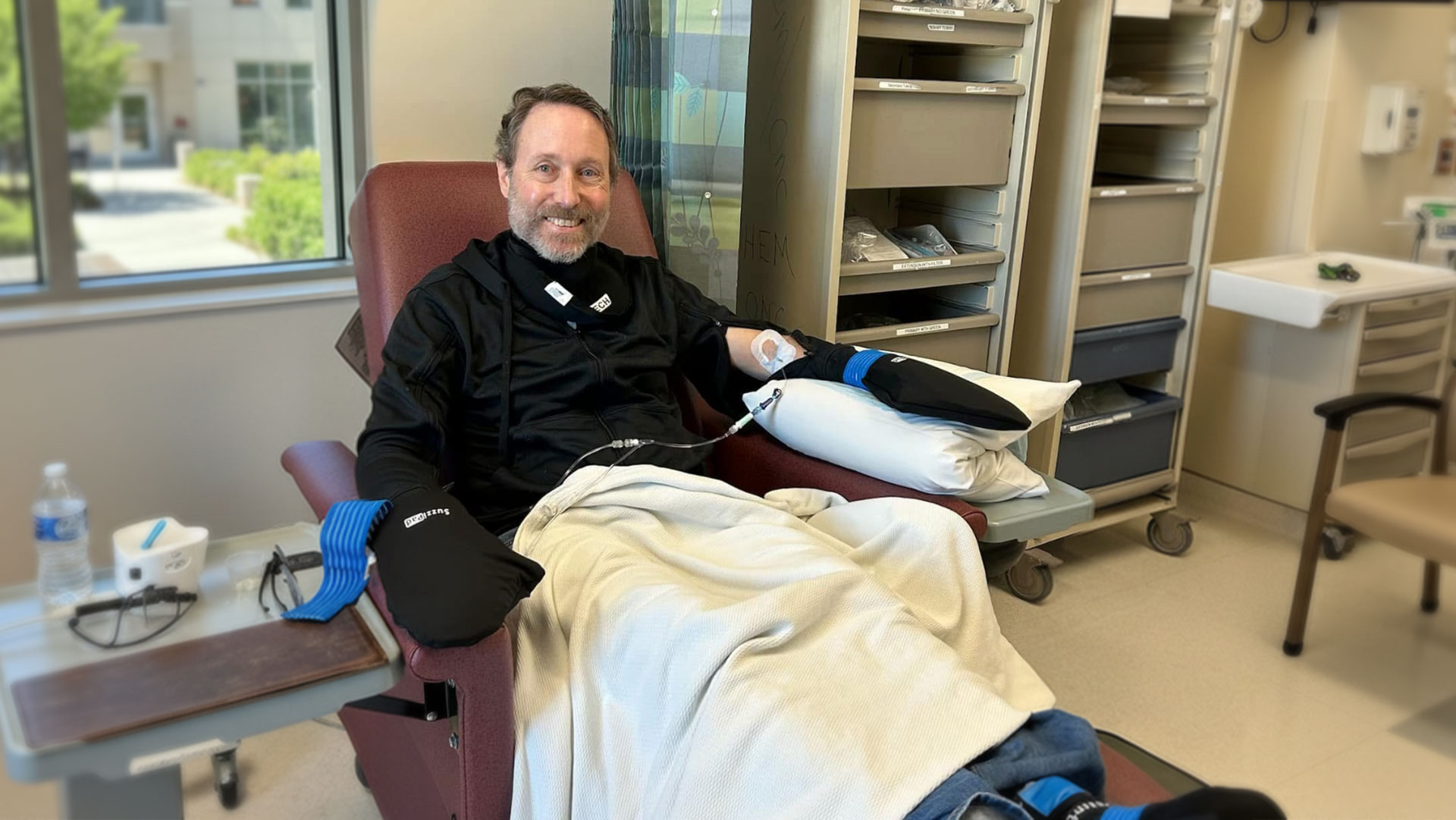
When you're diagnosed with colorectal cancer, every instinct tells you to act immediately. The anxiety can be overwhelming and waiting may feel like you're letting the disease win. But here's what many patients and families don't realize: waiting for the right information isn't hesitation, it's precision. And sometimes, that information can save your life.
When "No Pain, No Gain" Almost Cost Everything
Troy wasn't thinking about colorectal cancer when his abdominal pain started in October. After all, he'd had a negative FIT screening test before. For weeks, he and his wife Jodi went through appointment after appointment, exploring possibilities like acid reflux and even a rare parasitic infection from Troy's military service in the Middle East.
When a colonoscopy finally revealed a tumor two months later, things moved fast. The mass was so severe the doctors couldn't even get the scope past it. Ten days later, Troy had surgery, and stage III colorectal cancer was confirmed.
As Troy recovered, the couple threw themselves into research mode, learning everything they could about his upcoming chemo. Jodi found icing protocols to prevent nerve damage from oxaliplatin and special mouth rinses to prevent sores from capecitabine. Troy knew it would be rough. "I knew it was going to suck, I was kind of prepared for that," he says.
But nothing prepared them for how bad it actually got. After his first cycle, an oxaliplatin infusion plus two weeks of capecitabine pills, Troy couldn't get out of bed for nine days. "It was brutal," he remembers.
At first, they chalked it up to the nature of chemotherapy. "We thought 'no pain, no gain.' That's what chemo is," Jodi explains. "But I knew, something's not right."
The Late-Night Discovery That Changed Everything
Jodi refused to accept that Troy's suffering was normal. She spent hours researching, digging through forums, medical sites, anything that might explain why her husband was having such extreme reactions.
The night before Troy's next infusion, just as she was about to put down her phone and go to sleep, Jodi came across a comment in an online forum. Someone was asking about DPD deficiency testing. She clicked through and found the website for Advocates for Universal DPD/DPYD Testing.
As she read, her heart raced. "This is it! This is 100%—this is it." Troy's symptoms matched perfectly. She went on to read devastating stories of patients with DPD deficiency who had died from the toxicity of capecitabine and fluorouracil because their bodies lacked the enzyme needed to break down these drugs.
Speaking Up and Saving a Life
The next day at Troy's appointment, Jodi asked his oncology team if he'd been tested for DPD deficiency. They told her it wasn't indicated, and besides, Troy didn't have mouth sores, a common sign of the deficiency.
But Jodi pushed back. She was certain the mouth rinses they'd been using were masking that symptom. She also pointed out that Troy's unusually high pain tolerance and excellent physical fitness might be making his symptoms seem less severe than they actually were. She asked if they could test him anyway.
The team agreed. They ordered the DPD deficiency test, gave Troy an extra week to recover, and reduced his chemo dose because of the intolerable side effects.
A week later, Troy started his second cycle with the reduced dose. The following day, he got the call. The test showed he has intermediate DPD deficiency. His body couldn't properly break down capecitabine, leaving dangerous amounts in his system. His dose needed to be reduced even further to prevent a potentially fatal reaction.
Troy is blunt about what would have happened without that test: "I couldn't advocate for myself. Without Jodi, I would have been dead, for sure. Not a doubt in my mind."
More Than One Answer
DPD testing wasn't the only biomarker testing Troy had, and the other results have been just as important for his care. His colorectal cancer has a BRAF mutation, specifically V600E, which means he has a higher risk of the cancer coming back.
Armed with that knowledge, Troy's team designed a more aggressive follow-up plan with more frequent imaging scans, blood tests, and colonoscopies to catch any recurrence early. If his cancer does return or spread, that same BRAF mutation could make him eligible for targeted therapy with BRAF inhibitor drugs.
Today, Troy is “NED”; he has no evidence of disease. But he and Jodi know their journey isn't over, and they're grateful to have the roadmap his biomarker testing provided.
Why Waiting for Biomarker Results Matters
It's natural to want to start treatment immediately after a cancer diagnosis. Patients, caregivers, and even healthcare providers feel that urgency. But starting treatment without biomarker results can mean missing opportunities for therapies that are specifically tailored to your tumor's biology, or avoiding treatments that won't work or could even be harmful.
Studies show significant gaps between guidelines and actual practice. In one study, more than 60% of colorectal cancer patients had no evidence of biomarker testing before starting first-line treatment.
Biomarker testing typically takes about 10-14 days in many regions, though it may take several weeks in areas where samples need to be shipped to specialized labs. That might feel like forever when you're anxious to begin treatment, but those days could be the difference between getting the right treatment and the wrong one.
Don't Wait to Ask Questions
As Jodi says, "You've just got to ask the questions. Knowing your subset and knowing that every single cancer is different..."
Troy finishes her thought: "Knowing your cancer is critical."
If you or a loved one has been diagnosed with colorectal cancer, talk to your healthcare team about biomarker testing. Ask
- What biomarker tests are recommended for my cancer?
- When will testing be done, and how long will results take?
- What will we learn from these tests?
- How might the results change my treatment plan?
Remember, waiting those extra days or weeks for biomarker results isn't delaying your care, it's making sure you get the most effective, personalized care possible. In colorectal cancer treatment, knowing is absolutely worth the wait.