
GCCA Contributes to GCCN's Close the Loop Report
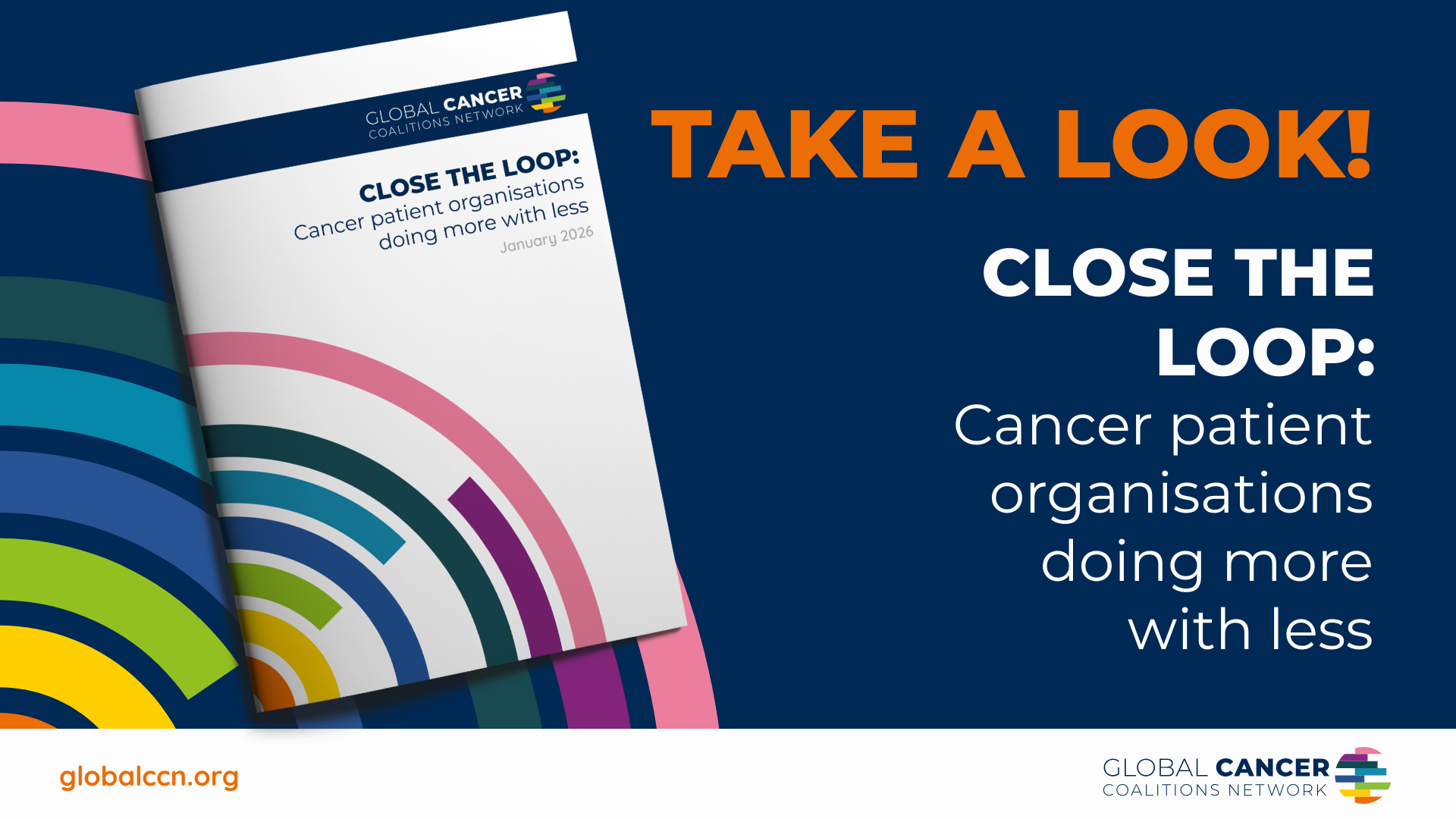
Five years on from the pandemic, the picture for cancer patient organizations is complex. There is resilience, there is innovation, and there is a resource crisis that we can no longer afford to ignore.
As part of the Global Cancer Coalitions Network, we were proud to contribute to Close the Loop, a new global report that takes an honest look at where patient organizations stand today. Drawing on data from 104 organizations across 45 countries, this report doesn't deal in abstractions. It reflects the lived reality of patient advocacy organizations, supporting millions of people affected by cancer while navigating rising demand, shrinking budgets, and health systems that are still, frankly, catching up.
The gap between need and capacity is widening
Let's start with what the numbers tell us. More than two-thirds of organizations (69%) are seeing higher demand for patient services now than before the pandemic. That's not surprising. Delayed diagnoses, disrupted treatment pathways, and the long psychological tail of COVID-19 have all taken their toll on patients and families.
What is harder to sit with is this: nearly two-thirds of organizations (62.8%) say their income has either flatlined or fallen, often in the context of rising costs and inflation. Over42% say their current income simply isn't enough to meet patient needs. In low- and middle-resource settings, that figure is even higher.
And yet organizations are not pulling back. They are stretching: stretching teams, stretching volunteers, stretching goodwill. That is not a sustainable foundation for the kind of support patients deserve.
COVID changed how we work — and some of that is genuinely good
One thing the pandemic forced upon us turned out to be worth keeping. Remote and hybrid models of patient support are now embedded across the sector, with over three-quarters of organizations (77%) providing direct patient services in this way.
Online education, peer support, counseling, patient navigation, and recorded webinars have opened doors for patients who previously faced significant barriers: those living in rural or remote areas, those managing mobility issues, those trying to balance treatment with work or caring responsibilities. Telephone support remains vital too, particularly where internet access isn't reliable.
These new models have genuinely expanded reach, and in many cases helped manage costs. But they have also raised expectations. Patients now expect timely, accessible support, and meeting that bar requires sustained investment, not just ingenuity.
Health system recovery is real, but uneven
Cancer services have certainly improved since the height of the pandemic. But only around half of organizations report that key diagnostic and treatment services have fully returned to pre-pandemic levels. Delays in screening, diagnosis, treatment and follow-up are still affecting patients every day.
Perhaps most frustrating is this: despite being closest to patients, organizations are rarely at the table when recovery of services is being planned. Only one in three (32%) report being involved in government-led consultations on restoring cancer services. That's a significant missed opportunity. The average estimated setback to cancer diagnosis and treatment caused by the pandemic is three years, and even longer in lower-resource settings. Patient organizations didn't cause that delay but we have been working to help patients navigate its consequences. We should be partners in solving it, not an afterthought.
What this report makes clear
Despite ongoing challenges, the message from the report is clear: patient organizations remain focused on what matters most: patients. Across regions and cancer types, organizations show determination to continue adapting, innovating and supporting those affected by cancer.
Close the Loop provides clear evidence that patient organizations are not an optional extra, but essential partners in resilient health systems. Recognizing, involving and sustainably supporting their role will be critical to improving cancer care outcomes worldwide.
Read the full Close the Loop report here.