
Knowing Is Worth the Wait: Dan's Story
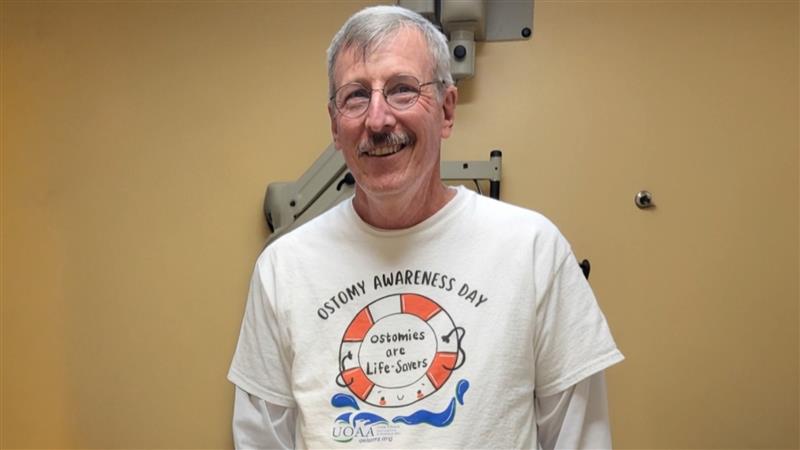
When you're facing a potential cancer diagnosis, every instinct tells you to act immediately. The fear can be overwhelming and waiting can feel unbearable. But as U.S. Navy veteran Dan learned, taking time to gather the right information isn't hesitation, it's strategy. And sometimes, that information can change everything.
A Routine Screening That Changed Everything
Dan went in for a routine colonoscopy at age 50, the recommended screening age at the time. As a Navy veteran of three conflicts, he'd faced plenty of challenges in his life, but nothing quite prepared him for what his doctors found: hundreds of polyps throughout his colon and rectum.
The doctors suspected a hereditary syndrome was causing these precancerous polyps. If left untreated, they would become colorectal cancer. It was a race against time, but not the kind Dan initially thought.
React or Respond?
Dan's first instinct was pure action. "I wanted to get the surgery, get it done as quick as possible," he remembers. But his medical team had a different recommendation: genetic testing. It wasn't easy to wait. This was back in 2011, when testing turnaround times were considerably longer than they are today. Dan didn't have cancer yet, so there was no urgent testing order. He would need to wait several weeks for answers.
Dan's military background had taught him an important distinction. "We have two choices," he explains. "We can react or we can respond. My military background equipped me to respond by gathering information so I can make a logical decision. "So Dan did his homework. He read credible resources, consulted extensively with his gastroenterologist, genetic counselor, colorectal surgeon, and the chief of surgery. He asked questions. He learned.And he waited for the facts.
The Answer That Made All the Difference
After germline genetic testing, Dan received his diagnosis: attenuated Familial Adenomatous Polyposis, or aFAP. Classic Familial Adenomatous Polyposis, and its subtype aFAP, are inherited syndromes that carry a high cancer risk. They cause numerous abnormal growths called adenomatous polyps in the colon and rectum, and those polyps will become colorectal cancer if left untreated.
The timeline differs between classic FAP and attenuated FAP. In classic FAP, the average age of colorectal cancer development is 39. For attenuated FAP like Dan's, it's 55. Dan's polyps had been caught just in time.
But here's what mattered most: because Dan had waited for genetic testing, he and his medical team could make a fully informed decision about his treatment. They knew exactly what they were dealing with and could plan accordingly.
A Life-Saving Decision
Armed with complete knowledge about his condition, Dan decided to undergo total proctocolectomy with permanent ileostomy. His entire colon and rectum were removed, and a stoma—an opening in his abdominal wall—was created. His ileum (the last segment of the small intestine) was connected to this stoma, allowing waste to pass out of his body into a removable ostomy pouch. It was major, life-changing surgery. But it was the right surgery for his specific condition.
More Than 13 Years Cancer-Free
Since his preventive surgery more than 13 years ago, Dan has not developed colorectal cancer. By removing the precancerous polyps and the organs where they would have continued to grow, the surgery prevented colorectal cancer from ever taking hold. Dan has taken the acronym of the condition that changed his life, AFAP, and turned it into his life's motto: Always Forge Ahead with Purpose. True to that motto, he's become a fierce advocate for others facing similar situations. He serves as an ambassador for the hereditary colorectal cancer community, the rare disease community, and the ostomy community, and speaks out to bring awareness and support to men's mental health.
His message remains consistent: "Stay positive, ask lots of questions, talk to your family, talk to your medical team, and research, try to obtain as much information as possible to prepare yourself."
Why Waiting for Biomarker Results Matters
Dan's story shows why taking time for genetic and biomarker testing can be life-saving, even when every fiber of your being wants to rush into treatment.
Studies show that more than 60% of colorectal cancer patients have no evidence of biomarker testing before starting first-line treatment. That's a missed opportunity that could mean the difference between getting the right treatment and the wrong one.
Biomarker testing typically takes about 10-14 days in many regions, though it may take several weeks in areas where samples need to be shipped to specialized labs.Yes, those days can feel endless when you're anxious about your diagnosis. But as Dan learned, waiting for complete information allows you to respond strategically rather than just react emotionally.
Biomarkers are pieces of information about your health and your cancer, including things like substances released by tumors into your blood, genetic changes in tumor cells, or inherited genetic changes like Dan's. This information helps your healthcare team choose the most effective treatments for your specific situation and avoid treatments that could be ineffective or even dangerous.
Don't Wait to Ask Questions
Dan's advice applies to everyone facing a colorectal cancer diagnosis or abnormal screening result: ask lots of questions, talk to your medical team, and gather as much information as possible.
If you or a loved one has been diagnosed with colorectal cancer or precancerous conditions, talk to your healthcare team about biomarker and genetic testing. Ask what tests are recommended, when results will be available, and how they might change your treatment plan.
Remember Dan's wisdom: you can react or you can respond. Waiting those extra days or weeks for biomarker results isn't delaying your care, it's making sure you get the most effective, personalized care possible. In colorectal cancer treatment, knowing is absolutely worth the wait.