
CRC Patient Stories: Cheri
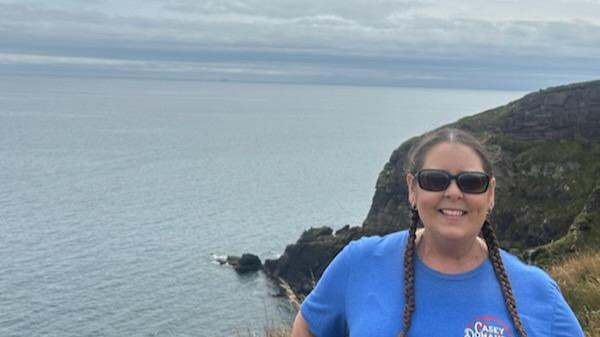
From Routine Screening to Stage IV: Cheri’s Colorectal Cancer Journey
Cheri Busch never expected that a routine screening would change her life, but it did. What began as a proactive health decision quickly became a fight against stage IV colorectal cancer, and today, her story is one of resilience, advocacy, and gratitude.
A Life Full of Adventure
Cheri, a proud Texan living in a suburb of southeast Houston, describes herself as someone who embraces life fully. She has been with her husband, her “rock”, for nearly 24 years and treasures the unwavering support of her close-knit family.
Her love of travel has taken her across the globe, from Amsterdam and Munich to Rome and Ireland, as well as across the United States. Whether exploring new cultures, visiting baseball stadiums, or spending quiet time reading at home with her 14½-year-old cocker spaniel, Cheri has always valued making meaningful memories.

The Screening That Changed Everything
At 45, Cheri made a decision that ultimately saved her life.
“I was asymptomatic and only found out my diagnosis because I am a person who does my screening exams.”
During a routine checkup, her primary care physician mentioned updated screening guidelines recommending colonoscopies starting at age 45. As a mammography technician, Cheri already believed strongly in early detection. “I said yes, I believe in screening exams (I am a mammography tech) and early detection is key.” Despite a history of anemia, nothing initially raised alarm. Looking back, she recognizes subtle signs like fatigue, but at the time, they felt like a normal part of a busy life.
A Life-Altering Diagnosis
On September 25, 2023, Cheri underwent her colonoscopy. When she woke up, her husband was by her side, and her life had changed. Her doctor delivered the news: a 6 cm mass in her sigmoid colon, almost certainly cancer.
“I know you don't have pathology back, how sure?”
“99.9%”
Within three days, the diagnosis was confirmed as colorectal adenocarcinoma. Shortly after, scans revealed that the cancer had already spread to her liver. “In 3 weeks, I went from a normal screening exam to a stage 4 cancer patient.”
Precision Medicine and a Rapid Plan
Cheri’s care team moved quickly, initiating extensive biomarker and genetic testing within weeks. These results helped guide her treatment, including identifying eligibility for targeted therapy with EGFR inhibitors.
She also began regular ctDNA monitoring, which proved critical: “It has been the only blood test that detected an abnormal number on my first draw, which was 47.60.” ctDNA is fragmented DNA from a tumor that is found in the bloodstream.
A Complex Treatment Journey
Initially, surgery was planned, but the discovery of metastasis shifted her course to chemotherapy. She began treatment just one month after her colonoscopy, undergoing FOLFOX chemotherapy and later adding the EGFR inhibitor, panitumumab. However, severe allergic reactions forced adjustments to her regimen.
As treatment progressed, new complications emerged, including suspicious ovarian masses. Despite imaging suggesting otherwise, Cheri trusted her instincts and raised concerns, leading to further evaluation and ultimately surgery.
“I am so thankful I had the team I had, and they didn't just trust the images and listened to my concerns!” Over the course of several months, Cheri underwent multiple major surgeries, including colon resection, hysterectomy, ovary removal, and liver resection, followed by additional chemotherapy.
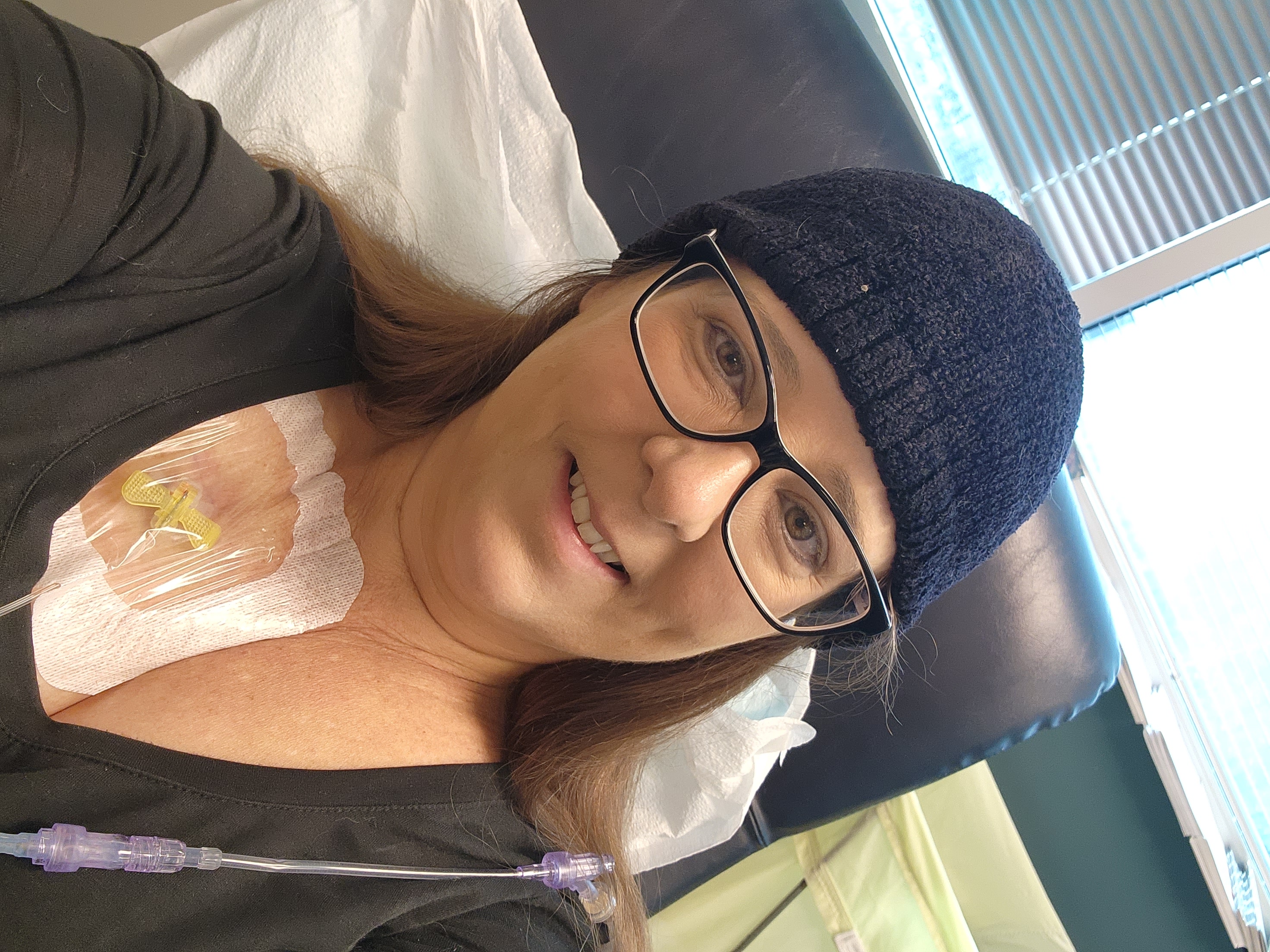
FacingChallenges Head-On
Cheri’s journey was anything but straightforward. From allergic reactions to chemotherapy drugs to debilitating neuropathy, she faced continuous hurdles. One ongoing challenge has been the lack of reliable blood markers:
“One of the first challenges that I have, and it stresses me out every day, is my bloodwork always looking normal/not elevated, even when I had cancer in my colon, liver and both ovaries.”
Despite these obstacles, she remained determined to complete treatment, even when it meant intensive steroid regimens for allergic reactions and constant monitoring. “I did whatever I needed todo to finish my treatment course.”
Through it all, her support system never wavered. Her husband attended every appointment, her mother provided constant care, and her extended family surrounded her with love and strength.“I have been beyond blessed with the people in my life.”
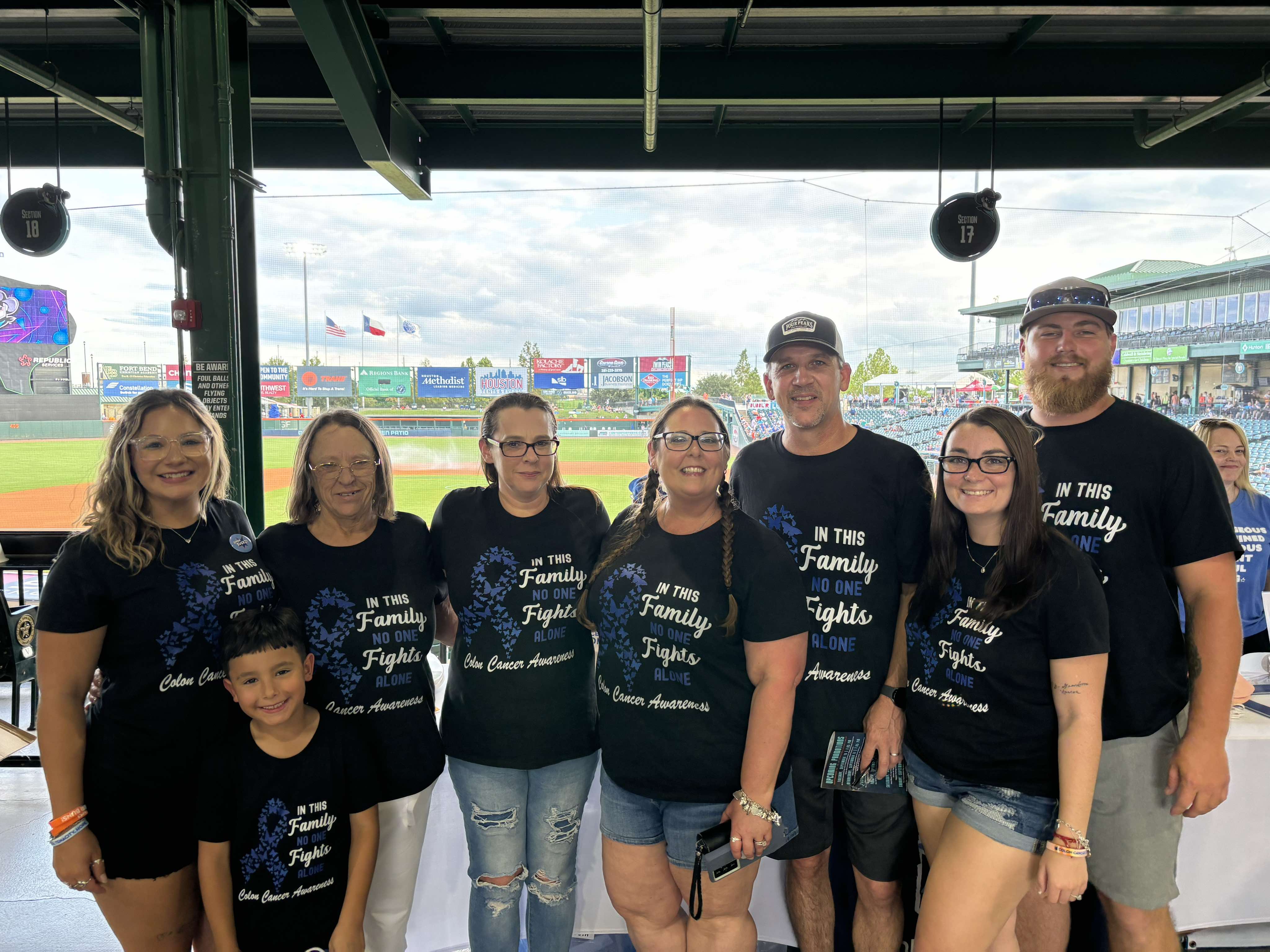
Reaching NED and Redefining “Normal”
As of April 1, 2026, Cheri is considered NED (No Evidence of Disease), a milestone she does not take for granted. “I am very fortunate to have reached this point so quickly in my cancer journey.” But survivorship comes with its own realities. Chronic pain, fatigue, and the challenge of returning to daily routines remain part of her life. “Most people do not understand that just because I am NED does not mean I am back to normal.”
A Message That Could Save Lives
Cheri is passionate about raising awareness, especially as colorectal cancer increasingly affects younger individuals. “Colorectal cancer is becoming a younger person disease, rising in people under 50 more and more in recent years.”
Her message is clear and urgent:
“Please pay attention to your body and don't be afraid to talk about any changes you notice. Do your routine screening exams. Early detection is the key!”
For those facing a diagnosis, she emphasizes the importance of self-advocacy: “Advocate for yourself so you can get the best care to fight this disease.”
Living with Purpose
Cheri approaches each day with gratitude and determination.
“I had my day of crying and feeling sorry for myself when I was first diagnosed, and said that's it, time to put your big girl panties on and fight.”
Her focus now is on making the most of every moment: “I wake up every day grateful that I am still here, even if I am having a bad day. I don't know how long I have here, so I take advantage of being with the people that I love and seeing and experiencing as many new things as I can.”
Cheri’s story is a powerful reminder of the life-saving impact of screening, the importance of listening to your body, and the strength found in community, advocacy, and hope.