
Know Your Biomarker: Do You Know HER2?
As cancer research advances, doctors are increasingly able to look beyond where a tumor starts in the body and focus on the biology driving its growth. One way they do this is through biomarkers—specific features of a tumor that help explain how cancer behaves and how it may respond to treatment.
One biomarker that appears in a small subset of colorectal cancers is HER2. While HER2 is best known for its role in breast cancer, it can also play an important role in colorectal cancer. Understanding HER2 starts with a key concept in cancer biology: oncogenes.
What Is an Oncogene?
Our cells contain thousands of genes that act like instruction manuals, telling cells when to grow, divide, repair themselves, or stop growing. Some genes specifically regulate cell growth and survival. In healthy cells, these genes maintain balance so cells grow only when needed.
When certain changes occur—such as mutations or extra copies of a gene—these normal genes can become oncogenes. An oncogene is a gene that has been altered in a way that promotes cancer growth, sending continuous signals that push cells to divide and multiply uncontrollably.
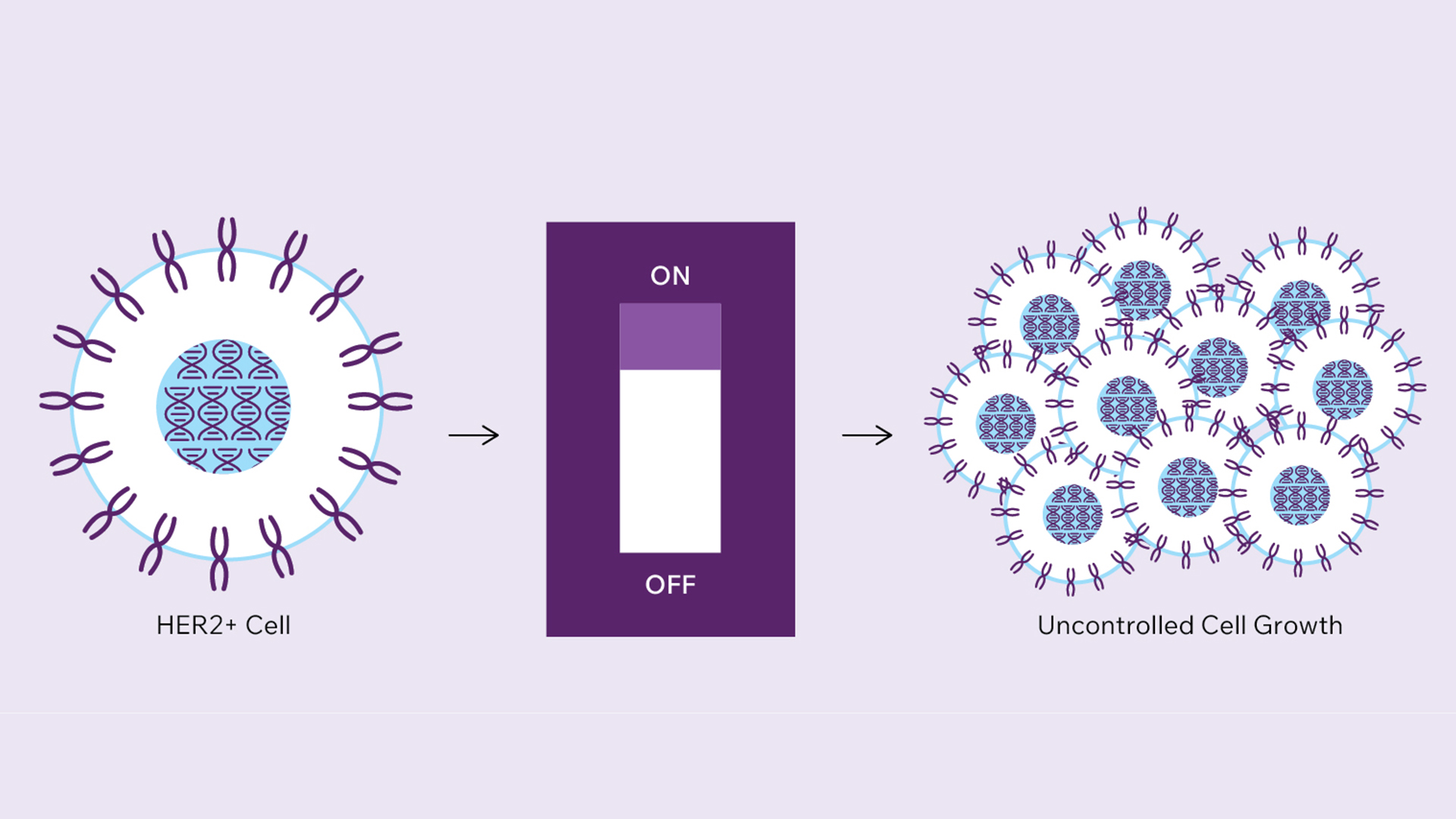
A helpful analogy is a light switch. In healthy cells, growth signals turn on when needed and turn off when the job is done. But an oncogene acts like a light switch stuck in the “on” position, continually telling the cell to grow.
HER2 is one example of a gene that can behave this way when altered, sending repeated growth signals that can contribute to the development of cancer.
What Is HER2?
HER2 (short for Human Epidermal Growth Factor Receptor 2) is a gene that plays a key role in regulating cell growth. It produces a protein receptor on the surface of cells that receives signals telling the cell when to grow or divide.
Problems arise when HER2 is abnormal:
· Gene amplification – too many copies of the HER2 gene
· Protein overexpression – too much HER2 protein produced
These changes can lead to an excess of HER2 receptors on the cell surface, sending too many growth signals and encouraging the cell to divide uncontrollably. Because of this, HER2 can act as an oncogene in certain cancers.
HER2 in Colorectal Cancer
HER2 is most commonly associated with breast and stomach cancers, but it is also found in 3–5% of colorectal cancers. These changes are not inherited; they develop in tumor cells during a person’s lifetime.
HER2 alterations are more often found in tumors that do not have mutations in other common oncogenes, such as KRAS, NRAS, or BRAF. Testing HER2 can provide important information about a tumor’s behavior and potential treatment options.
Why HER2 Matters
HER2 is an important biomarker because it helps doctors understand:
· how a cancer is growing
· how it may behave over time
· which treatments might be effective
Testing for HER2 is recommended for people with metastatic colorectal cancer (stage IV), where biomarker information can guide treatment decisions and help identify patients who may benefit from HER2-targeted therapies.
Looking Ahead
HER2 illustrates how cancer care is becoming more personalized and precise. By understanding the molecular drivers of a tumor, doctors can tailor treatment to the biology of each cancer.
Although HER2 alterations are relatively uncommon in colorectal cancer, identifying them is crucial for guiding therapy. In our next blog post, we’ll explore HER2-targeted treatments, including HER2 inhibitors and how they are being used to treat colorectal cancer.
The HER2 campaign, part of the Know Your Biomarker program, was made possible with support from Pfizer.