
GCCA and National Cancer Research and Innovative Strategy Workshop
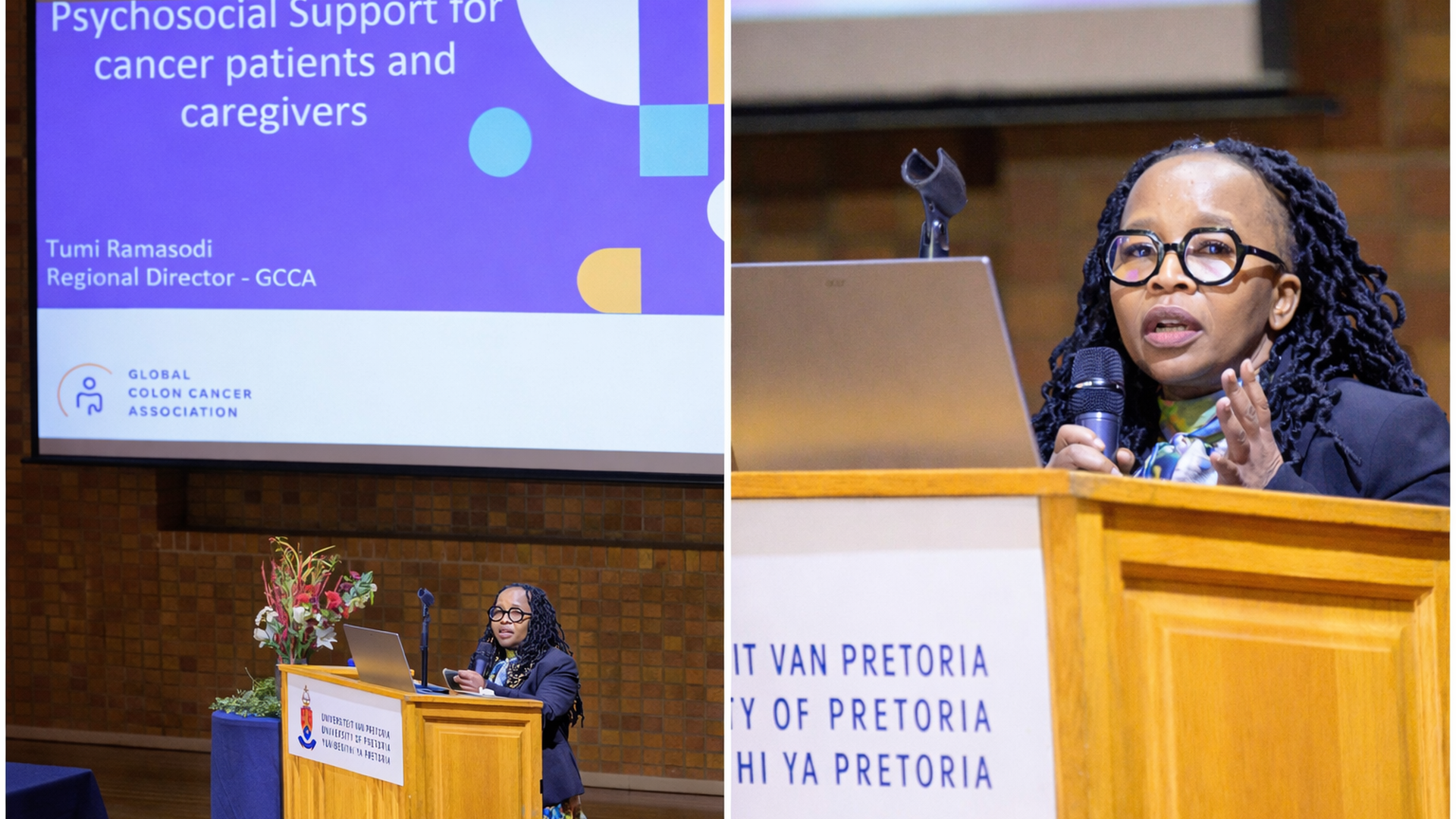
National Cancer Research and Innovative Strategy Workshop in Gauteng, South Africa
This November, for Caregivers Month, I was honoured to be invited to speak at a workshop organised by the National Cancer Research and Innovative Strategy (NCRIS), focused on the psychosocial needs of cancer patients and their caregivers. The room was filled with doctors, scientists, professors, and professionals deeply committed to advancing cancer care across disciplines. Standing in a room of experts can feel daunting. Yet it is precisely in these spaces that lived experience needs to be present.
Psychosocial needs are often discussed in theory, but living with cancer reveals how deeply emotional, relational, and human this journey truly is. For patients, cancer affects identity, dignity, mental health, relationships, work, and one’s sense of safety in the world. Not forgetting the huge financial burden that comes with this diagnosis. For caregivers, it often brings chronic stress, anticipatory grief, exhaustion, and a quiet sidelining of their own needs.
I highlighted the fact that psychosocial distress does not always present loudly. Many patients and caregivers learn to function, comply, and cope while silently carrying fear, anxiety, guilt, and emotional fatigue.
Caregivers are rarely asked how they are coping psychologically. Their distress is often normalised or overlooked, even though it directly affects patient outcomes and family well-being. Psychosocial care is not an optional add-on. It is foundational to ethical, patient-centred cancer care.
Psychological safety, empathy, and communication can enhance clinical excellence. The system must create space for emotions in consultations, acknowledging uncertainty, referring earlier to psychosocial support, and recognising caregivers as part of the care team.
It was encouraging to witness genuine engagement in the room and a willingness to reflect on how systems can evolve to better support the whole cancer journey. This allowed for deeper reflection, questions, and dialogue in bridging science, clinical practice, and lived experience.
November may be Caregivers Month, but the responsibility to listen, support, and respond meaningfully must extend far beyond one month. This is how we move toward cancer care that is not only advanced, but humane.