Watch the 2026 Global CRC Congress
All sessions are now available on demand.
Welcome to the 2026 Global Colorectal Cancer Congress
Colorectal cancer is changing. Our response has to change with it.
Watch our 2026 sessions
The State of Colorectal Cancer in Kenya
Between 60 and 79% of colorectal cancers in Kenya are diagnosed at stage 3 or 4. What would it take to change that?
Opening Day 1 of the Global CRC Congress, Dr. Joan-Paula Bor of Kenya’s Ministry of Health and National Cancer Control Program gives a candid look at where the country stands: strong policies on paper, screening rates below 1%, and a goal of reaching 30% by 2028. She walks through the gaps that matter most to patients, from access to colonoscopy to what social health insurance does and doesn’t cover. Then she turns to the advocates in the room with practical advice from inside government: bring evidence, make a specific ask, and learn to speak the language of finance. Her lessons reach well beyond Kenya.
Prevention, Risk Reduction & Screening in Colorectal Cancer
Colorectal cancer is one of the most preventable cancers in the world. So why is it still the second leading cause of cancer death globally?
In the keynote presentation of the Global CRC Congress in Nairobi, Dr. Partha Basu, Head of the Early Detection, Prevention and Infections Branch at the International Agency for Research on Cancer (IARC), the World Health Organization’s cancer agency, takes on that question. He shares early findings from a global screening survey for an upcoming Lancet Commission, which shows 103 countries still have no screening program, and makes the case that the test a country chooses matters far less than what happens after a positive result. Drawing on lessons from a screening pilot in Morocco, he shows how colonoscopy capacity can make or break a program, and why every country, with or without screening, should start by better caring for people who already have symptoms. A lively Q&A follows with advocates from around the world, covering early-onset CRC, AI in cancer detection, and how to get policymakers to listen.
Biomarkers, Precision Medicine & Diagnostics in Colorectal Cancer
Two people can have the same cancer and need completely different treatments. Biomarker testing is how we tell the difference.
In this Global CRC Congress session on biomarkers, precision medicine, and diagnostics, chair Helena Harnik of The Synergist and its From Testing to Targeted Treatments (FT3) program shows how patients, clinicians, companies, and policymakers can work together to close access gaps, with real-world examples from the Philippines, Croatia, Canada, and Brazil. She also discusses how advocates around the world can access free biomarker education and advocacy materials through the GCCA KnowYour Biomarker program.
She’s joined by panelists Francisco Freyria (FUTEJE, Mexico), Beyza Klein (Johnson & Johnson), and Stephen Rowley (Bowel Matters, UK). Francisco describes how a coalition across cancer types is pushing to bring precision medicine into Mexico’s national health law, Beyza shares why knowing your biomarkers is worth the wait, and Stephen, a stage 3C survivor, explains biomarkers and liquid biopsy from the patient’s side of the exam room.
Artificial Intelligence in Colorectal Cancer Care
What if a routine blood test could find colorectal cancer before it ever reached stage 3?
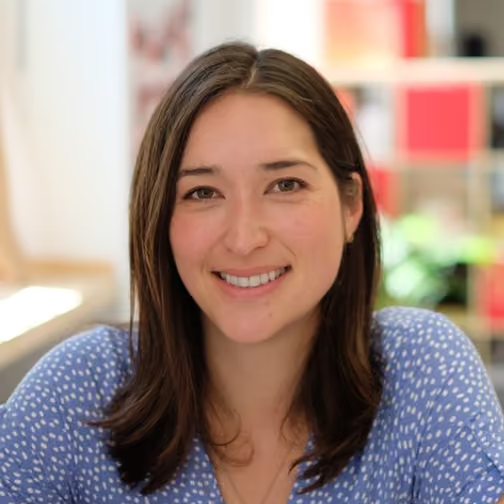
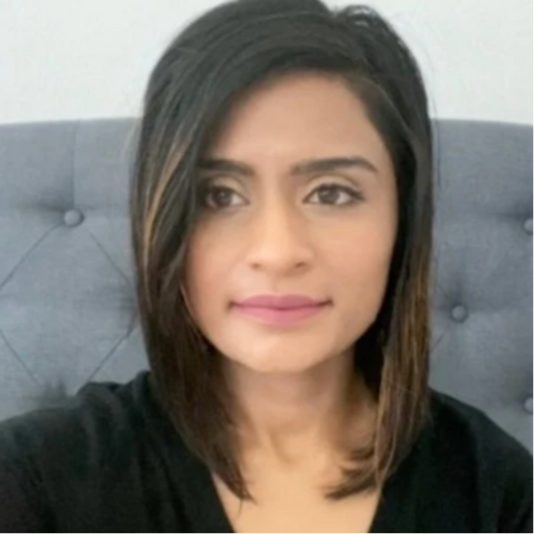
Inspired by her father’s journey as a stage 3C survivor, session chair Dr. Apeksha Patel, Medical Director in Oncology at Novartis, tells the story of how AI is already reshaping colorectal cancer care, from AI-assisted colonoscopy and blood-based screening to drug discovery, trial matching, and round-the-clock patient support.
She’s joined by panelists Dickson Daniel (Onco Intelligence, Tanzania), who is building AI tools that reach people by WhatsApp and even without internet access; Dr. Eulade Rugengamanzi (Butaro Cancer Center of Excellence, Rwanda), who explains why AI will be a colleague, not a replacement, for oncologists; and survivor Bimal Patel, who shares how AI helped him manage life after treatment. An honest Q&A follows on bias, cost, stigma, and keeping the human touch in care.
Advancing CRC Health Equity: Building Health System Capacity
What can a small grant do in the hands of a determined advocate? Quite a lot, it turns out.
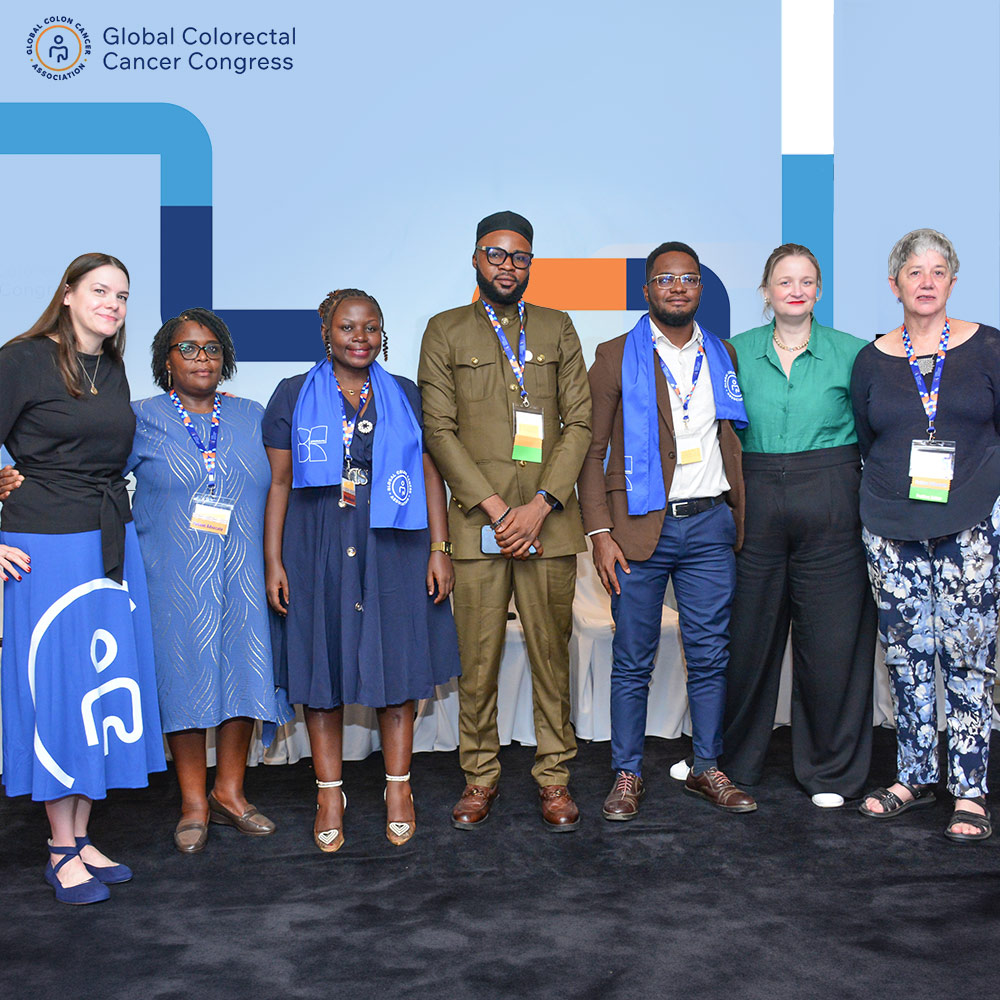
In this Global CRC Congress session on training, navigation, and policy advocacy, GCCA President Nicole Sheahan moderates a panel of CRC Health Equity Grants recipients, each sharing a local problem and how they set out to solve it.
Salome Meyer of Cancer Alliance (South Africa) describes uniting more than 35 organizations under One Voice, including a court win for 3,000 patients left waiting for radiation. Abiodun Moses of Project Pink Blue (Nigeria) shares the documentary “Blood inMy Stool” and patient materials translated into Igbo, Yoruba, and Hausa. Maud Mwakasungula of WOCACA (Malawi) explains how a national needs assessment led to training frontline health workers. Dr. Innocent Peter and Huruma Sepheli of KCRI (Tanzania) reveal why patients are sent home before cancer is ever considered, and what life after treatment looks like for people living with a stoma. Lauren Pretorius of Campaigning for Cancer (South Africa) shows how a multi-stakeholder think tank opened the door to building referral pathways with traditional healers. The discussion closes with a candid conversation about why advocates must collaborate instead of competing for funding.
Patient Experience, Caregiving & Survivorship in Advocacy
Surviving colorectal cancer is only the beginning.
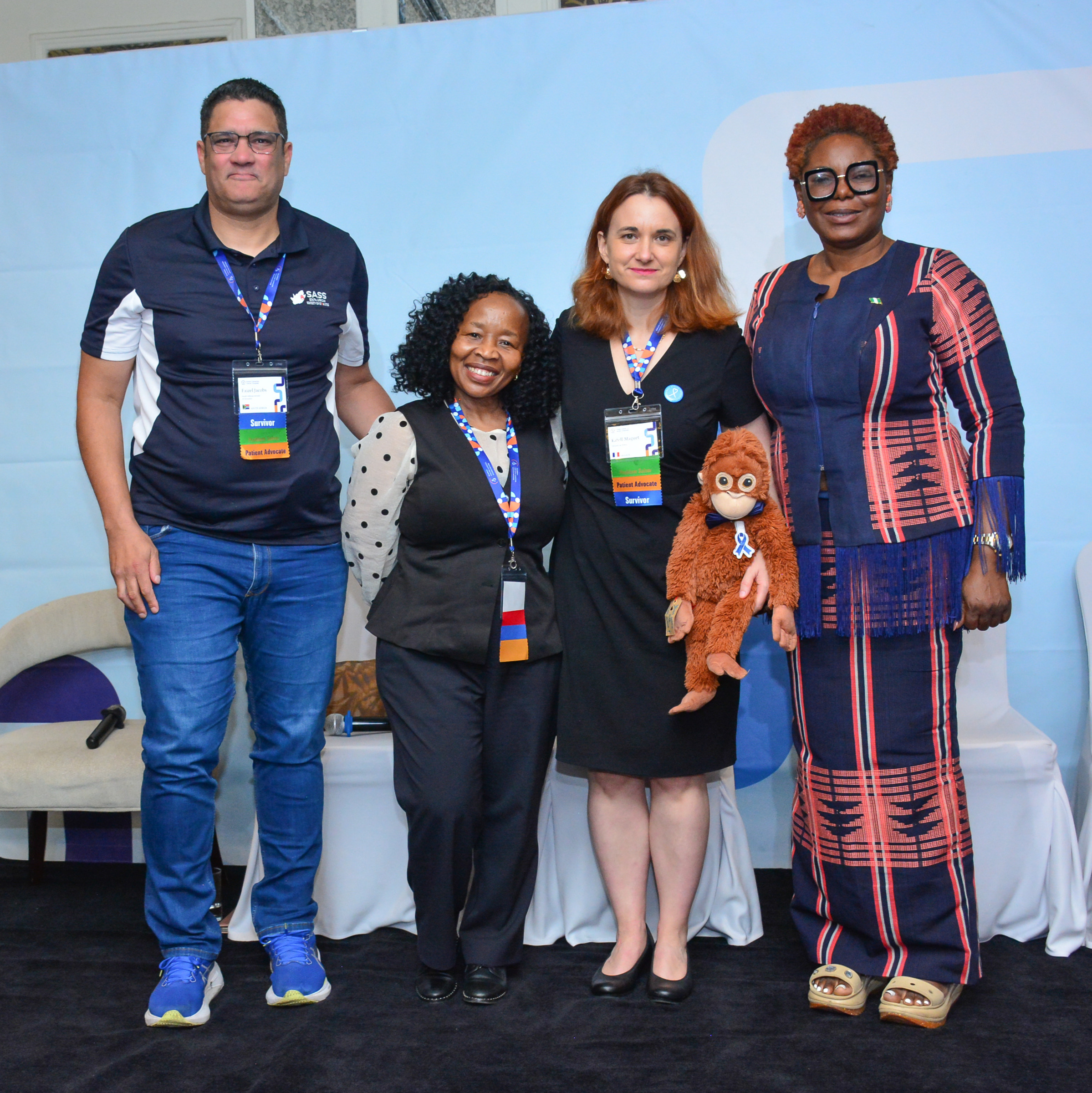
In this Global CRC Congress session, GCCA Regional Director for Southern Africa Boitumelo (Tumi) Ramasodi, herself a colon cancer survivor and patient navigator, leads a candid conversation about what happens after diagnosis, and how personal experience candrive real change.
Katell Maguet of Patients en Réseau (France), diagnosed at 40, explains why patients belong in research from the very beginning, and why fertility and quality of life must be part of every treatment conversation. Faizel Jacobs of the South African Society of Stomates shares how running marathons with a stoma led him to fight for access to pouches and a voice in national cancer policy. Eniola Akintunde of Niola Cancer Care Foundation (Nigeria) shares her experience caring for her late husband after his 2011 diagnosis, from doctors who wouldn’t discuss fertility or his prognosis, to being blamed and publicly called a witch by family afterhis death. Her story is a powerful reminder of how stigma and silence can harm families, and it inspired the foundation she has led for more than a decade so that no other caregiver faces it alone. The session closes with a Q&A on psychological support, returning to work, and why survivorship care should never be an afterthought.
Advocacy, Access & Policy
Why didn’t the bus taking patients 400 kilometers to chemotherapy have a toilet? Because no one had asked a patient.
In this Global CRC Congress session, Mazvita Muchengeti, Head of the South African National Cancer Registry at the National Institute for Communicable Diseases, shows how civil society organizations and cancer registries can work together to turn patient stories into evidence that policymakers act on. She shares real examples from South Africa and leaves advocates with three simple steps to take as soon as they get home.
She’s joined by a panel putting partnership into practice. Hana Nimer (SAID NGO, Lebanon) explains how her organization now offers free screening through more than 45 labs. Kai Han and Tina Di (Panda & Friends, China) describe a 100,000-member patient community that runs free monthly online multidisciplinary tumor boards with leading specialists. Belinda Wagner (Living with Cancer, South Africa) shares how she built the country’s first patient-led cancer registry, and Ann Korir (Kenya Medical Research Institute, Kenya) reflects on 25 years of registry data and her role in the advocacy that helped create Kenya’s National Cancer Institute. A lively Q&A follows on how small organizations can make room for policy work, building registry partnerships, and the rise of colorectal cancer in younger people.
Advancing CRC Health Equity: Community Screening & Awareness
Colorectal cancer is one of the few cancers we can screen for. That means you don’t need a medical degree to help save a life.
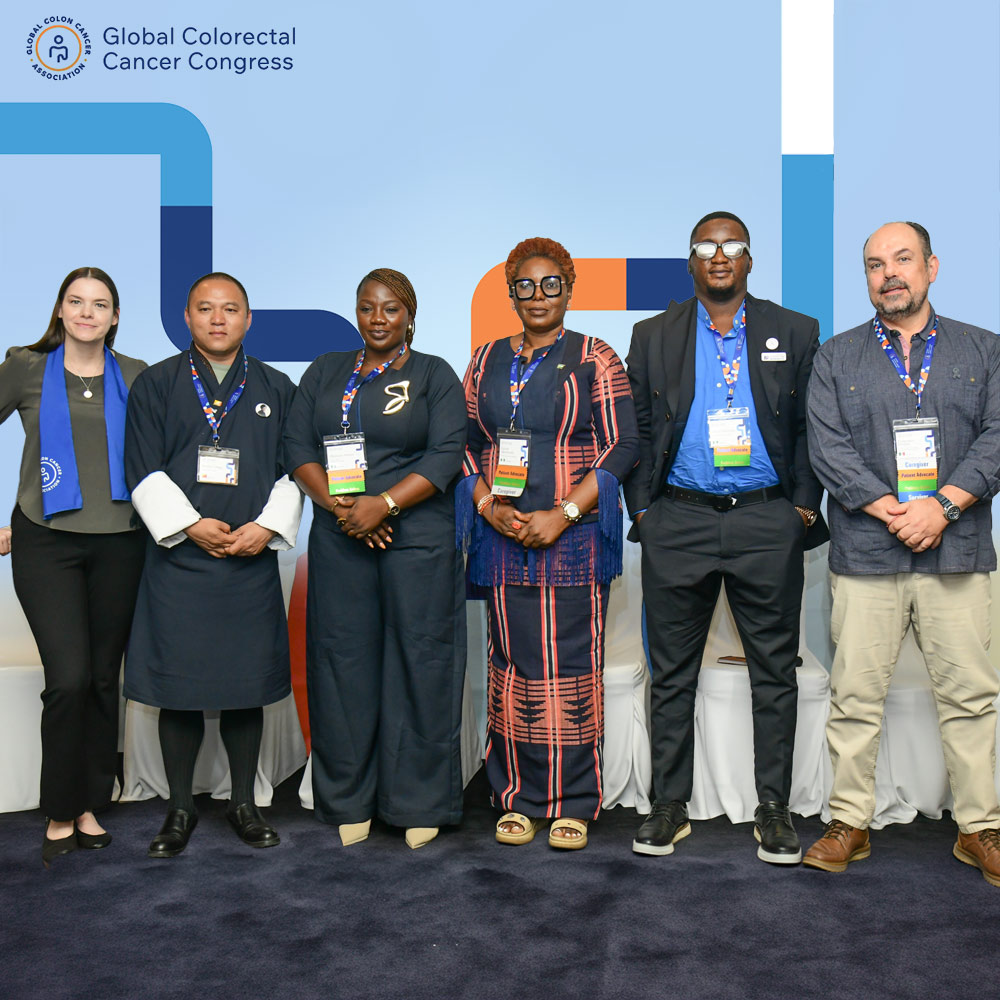
In this Global CRC Congress session, GCCA President Nicole Sheahan moderates a panel of CRC Health EquityGrants recipients who are bringing screening and awareness directly to their communities, from churches and markets to monasteries.
Eniola Akintunde of Niola Cancer Care Foundation (Nigeria) shares how winning over traditional rulers and community leaders opened the door to screening in Ogun State. Ifeoluwa Amure of St. Cyril Cancer Treatment Foundation (Nigeria) explains how picture-based materials in Yoruba and Pidgin and screening designed for people with disabilities helped reach those often left out. Victor Ekejiuba of the David Omenukor Foundation (Nigeria) describes partnering with a local church to educate more than 2,500 people and distribute FIT kits. Francisco Freyria of FUTEJE (Mexico) walks through a free FIT program with Mexico’s largest public hospitals that connects positive results to affordable colonoscopy. And Karma Tobgay of the Bhutan Cancer Society shares how awareness work with Buddhist monks helped prompt Bhutan’s health minister to announce plans for colorectal cancer screening. The Q&A covers the power of trusted “gatekeepers,” what to do when someone with a positive screening test won’t get a colonoscopy, and why symptoms should never be ignored at any age.
Advancing CRC Health Equity: Stoma Care, Ostomy Support & Survivor Quality of Life
An ostomy pouch is a medical device, not a luxury. Yet for many people living with a stoma, getting one is a daily struggle.
In this Global CRC Congress session, GCCA President Nicole Sheahan moderates a panel of CRC Health Equity Grants recipients working to help people with an ostomy live with dignity, confidence, and a better quality of life.
Salome (Sally) Kwenda of the Kenya Ostomy Association, who has lived with a stoma for 16 years, shares how her team brought supplies, hands-on education, and peer support to eight Kenyan counties and more than doubled the association’s membership. Faizel Jacobs of the South African Society of Stomates describes a first-of-its-kind clinical conference that brought the entire care team into one room. Phillip Matano of the Africa Cancer Foundation explains how his organization built ostomy support into its community work in Kenya, and Hana Nimer of SAID NGO (Lebanon) shows how even a small grant gave eight patients the supplies and training they needed, with seven reporting greater confidence in caring for their stoma. The conversation turns to the emotional toll of life with an ostomy, why stoma placement matters, the problem of donated supplies stuck in customs, and a call to have ostomy products recognized as essential medical devices worldwide.

Road to Resolution
The work that happened at this Congress does not end in this room.
GCCA President Nicole Sheahan closes the 2026 Global CRC Congress in Nairobi with a call to action for advocates everywhere. She introduces GCCA’s Road to Resolution, an effort to secure a World Health Assembly resolution on colorectal cancer, and explains why it will take a global community of patients, advocates, medical societies, and health ministries working side by side to get there.
Reflecting on the losses that bind this community together and the purpose that keeps survivors moving forward, Nicole invites everyone to turn the ideas shared over these two days into real commitments, so that when we meet again, we are reporting progress rather than repeating conversations.
Sponsors